Introduction to Sports Injuries
Quiz this lecture (128 questions)Dr. Mohamed Ezzat’s introduction to P.T for Sports injuryAny damage to tissues as a direct result of taking part in sport and exercise, which changes or stops how often or how hard you take part. (ORTH 416) covers what a sports injury is and how it is counted (IncidenceThe rate of injuries in a given time frame in a given population, usually counted as new injuries per 1000 hours of participation.), how injuries are classified (Acute injuryInjury due to sudden trauma to the tissue, with symptoms presenting almost immediately. vs Overuse injuryInjury that develops over a period of time, usually from repetitive loading of the tissue, with symptoms presenting gradually., tissue type, SeverityHow serious an injury is. Here it is judged by how long the symptoms last: mild, moderate or severe.), why they happen (Intrinsic factorsRisk factors from within the athlete: biological characteristics, anatomical factors, sex, age and stage of development. and Extrinsic factorsRisk factors linked to the practice of the sport itself and the environment where it is practiced. risk factors), how they are detected (Canadian Cervical Spine RuleA decision rule used after neck injury to decide whether the patient needs a neck radiograph.General meaning, not from the slides, Ottawa knee and ankle rules) and how they are prevented.
Learning outcomes
By the end of the lecture you should be able to:
- Define Sports injuryAny damage to tissues as a direct result of taking part in sport and exercise, which changes or stops how often or how hard you take part..
- Classify sports injuries.
- Understand common causes of sports injuries.
- Understand how to prevent sports injuries.
- Identify common sport-related injuries.
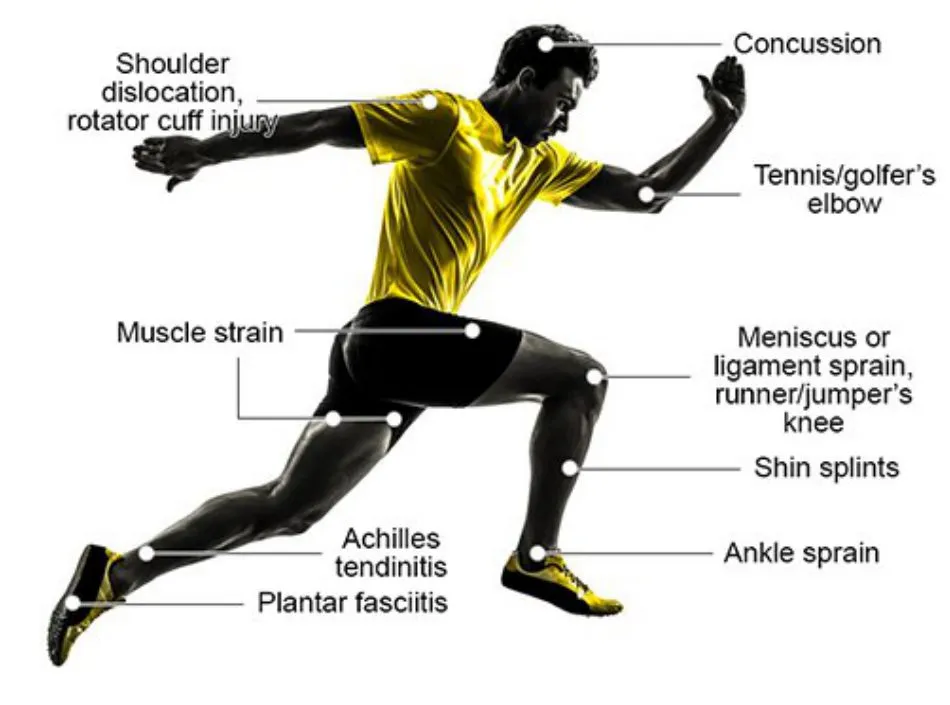
Injuries labelled on the first slides:
- Slide 2 figure: ConcussionA brain injury from a blow or shake that temporarily disturbs how the brain works.General meaning, not from the slides; shoulder DislocationA joint forced out of its normal position so the bone ends no longer line up.General meaning, not from the slides / Rotator cuffThe group of small shoulder muscles and tendons that hold the ball of the shoulder joint in its socket.General meaning, not from the slides; Tennis elbowOveruse elbow pain: tennis elbow on the outer side of the elbow, golfer's elbow on the inner side.General meaning, not from the slides; muscle StrainOverstretching or tearing of a muscle or its tendon.General meaning, not from the slides; MeniscusA C-shaped cartilage pad in the knee that cushions and steadies the joint.General meaning, not from the slides or LigamentA tough band of tissue that joins one bone to another and steadies a joint.General meaning, not from the slides SprainOverstretching or tearing of a ligament.General meaning, not from the slides / Runner's kneeOveruse knee pain, often around the kneecap, linked to running or jumping.General meaning, not from the slides; Shin splintsOveruse pain along the shin bone, brought on by running or jumping activity.General meaning, not from the slides; Achilles tendinitisIrritation and inflammation of the Achilles tendon, the thick tendon at the back of the ankle.General meaning, not from the slides; Plantar fasciitisPain under the heel or sole from an irritated band of tissue (the plantar fascia) along the bottom of the foot.General meaning, not from the slides; ankle sprain.
- Slide 3 collage: shin splints, ankle sprains, HamstringsThe muscle group at the back of the thigh that bends the knee.General meaning, not from the slides strain, dislocated shoulder, ACLAnterior cruciate ligament: a key knee ligament inside the joint that stops the shin bone sliding too far forward.General meaning, not from the slides tear, Groin pullA strain of the muscles on the inner thigh near the groin.General meaning, not from the slides, tennis elbow.
Definition and incidence
Definition of a sports injury
Sports injuryAny damage to tissues as a direct result of taking part in sport and exercise, which changes or stops how often or how hard you take part.: any damage to tissues as a direct result of participating in sport and exercise, which causes the frequency and/or intensity of participation to be changed or ceased.
- Includes (arrow on the slide): minor sports injuries that may not receive medical treatment → more SeverityHow serious an injury is. Here it is judged by how long the symptoms last: mild, moderate or severe. injuries that do require medical attention.
- All sports injuries can be sustained in a normal active lifestyle. E.g. a Grade (of sprain or strain)A scale for how badly a ligament or muscle is damaged, from grade I (least) up to grade III (most).General meaning, not from the slides SprainOverstretching or tearing of a ligament.General meaning, not from the slides of the ankle can be sustained as a result of a poorly maintained footpath while out walking.
Incidence
IncidenceThe rate of injuries in a given time frame in a given population, usually counted as new injuries per 1000 hours of participation.: the rate of injuries in a given time frame, in a given population. Usually expressed as new injuries sustained per 1000 hours of participation time.
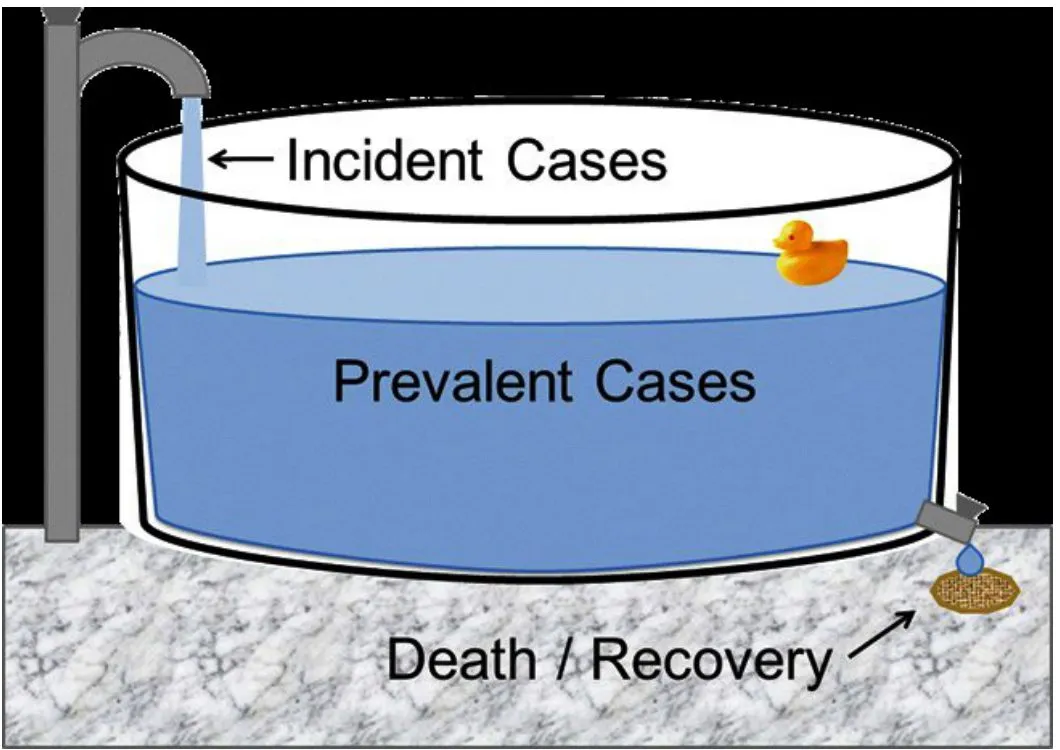
Slide 5 shows a tub-and-tap picture: new cases flowing in from the tap are Incident casesNew cases that appear over time. In the tub picture they are the water flowing in from the tap., the water in the tub is Prevalent casesAll existing cases, both new and old. In the tub picture they are the water already in the tub., and the drain is death / recovery.
Incidence vs prevalence
| Incidence | PrevalenceThe probability of already having the disease. It counts both new and old cases and does not need follow-up. | |
|---|---|---|
| Meaning | Probability of developing disease | Probability of already having disease |
| Numerator | Counts only new cases | Counts both new and old cases |
| Follow-up | Requires follow-up of individuals in a population to identify new cases | Does not require follow-up |
| Duration of illness | Does not depend on the duration of illness | Depends on duration of disease (long duration will eventually increase the prevalence of a disease) |
| Preferred measure when | Studying cause and effect | Estimating the population-based burden of a chronic disease or attribute (e.g. smoking) |
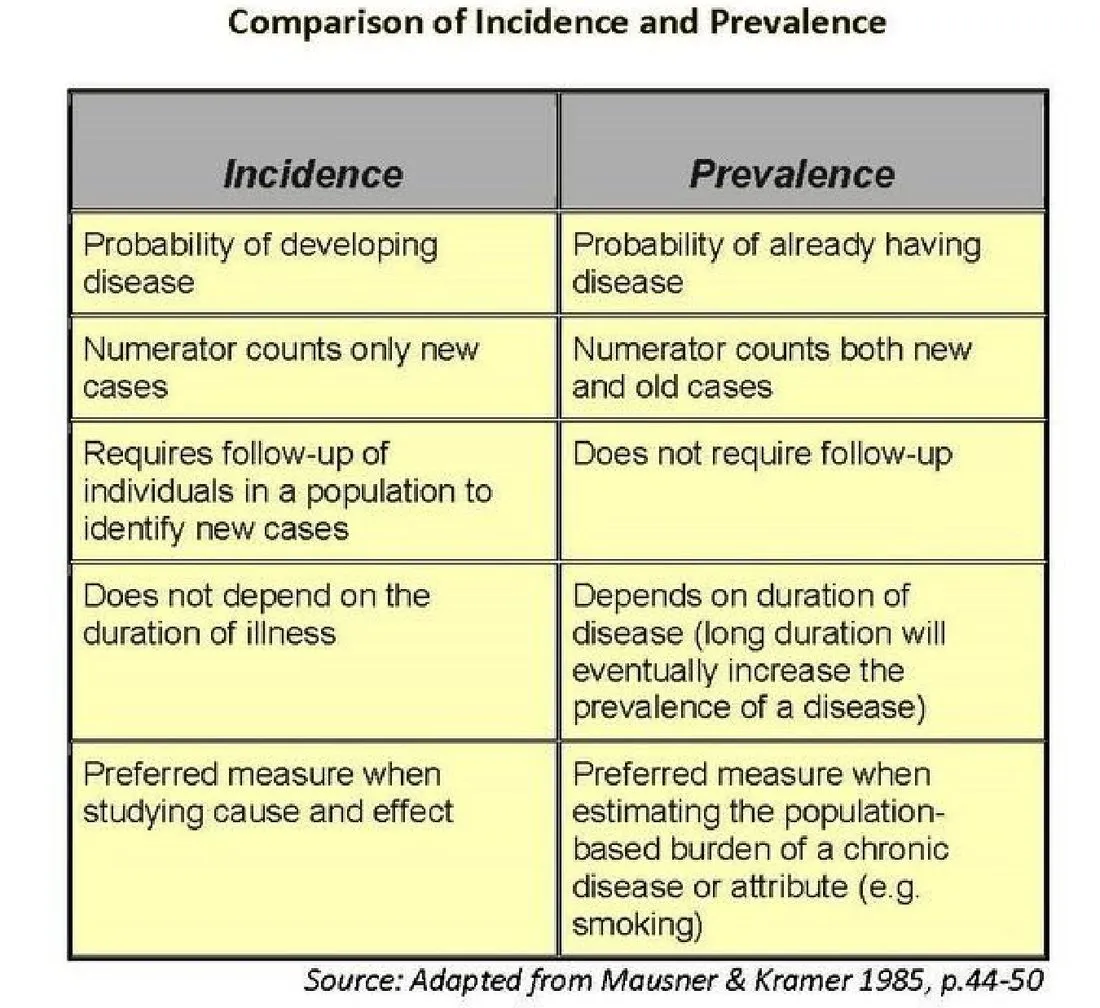
Source on the slide: adapted from Mausner & Kramer 1985, p.44-50.
Classification of sports injuries
There are many ways to classify Sports injuryAny damage to tissues as a direct result of taking part in sport and exercise, which changes or stops how often or how hard you take part., based on:
- Time taken for the tissues to become injured
- Tissue type affected
- SeverityHow serious an injury is. Here it is judged by how long the symptoms last: mild, moderate or severe. of the injury
- Which injury the individual sustains
Acute vs overuse injuries
Acute injuryInjury due to sudden trauma to the tissue, with symptoms presenting almost immediately. vs Overuse injuryInjury that develops over a period of time, usually from repetitive loading of the tissue, with symptoms presenting gradually. is one of the most common methods of classifying sports injuries. It relies on the Sports therapistA health professional who helps assess, treat and prevent injuries in people who play sport or exercise.General meaning, not from the slides knowing the Mechanism of injuryHow the injury happened, for example a sudden impact or repeated loading.General meaning, not from the slides and the onset of the symptoms.
Acute injuries
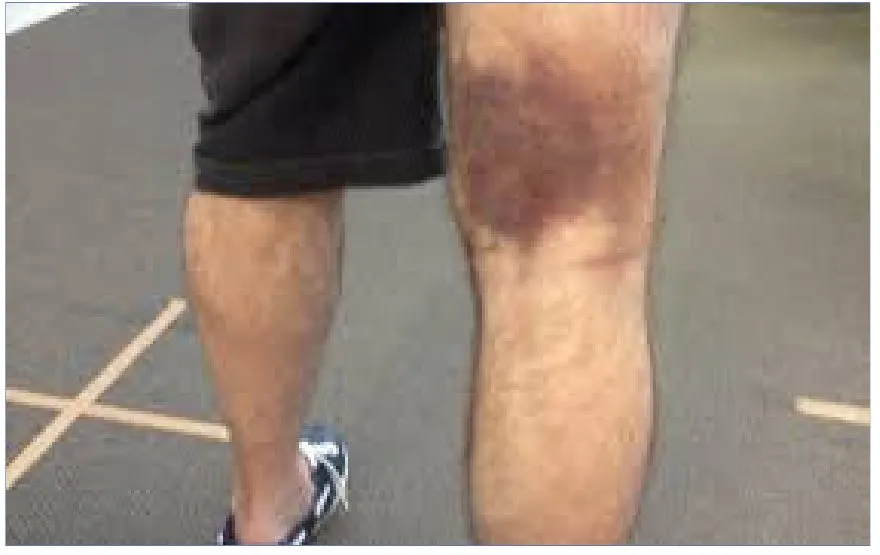
- Occur due to sudden trauma to the tissue, with symptoms presenting themselves almost immediately.
- Most of us have seen these injuries while watching sport, and a player requires medical attention.
- E.g. an acute injury such as a HamstringsThe muscle group at the back of the thigh that bends the knee.General meaning, not from the slides StrainOverstretching or tearing of a muscle or its tendon.General meaning, not from the slides in 100 meter sprinting.
Overuse injuries
- Slide 9 opens with the line “not representing a greater challenge to a sports therapist in diagnosis and management.”
- Occur over a period of time, usually due to Repetitive loadingPutting the same stress through a tissue again and again.General meaning, not from the slides of the tissue, with symptoms presenting gradually.
- E.g. an overuse injury common to marathon runners is ITB syndromeA repetitive stress injury from friction as the ITB slides over the prominent lateral femoral condyle at about 30 degrees of knee flexion..
- In contrast to acute injuries, the cause of overuse injuries is much less obvious.
- ITB friction syndrome (slide figure) is a repetitive Stress injury (bone)Bone overload from repeated loading, ranging from an early stress reaction to a stress fracture.General meaning, not from the slides that results from friction of the Iliotibial band (ITB)The thick band of tissue running down the outside of the thigh to just below the knee.General meaning, not from the slides as it slides over the prominent Lateral femoral condyleThe rounded bony bump on the outer side of the lower end of the thigh bone.General meaning, not from the slides at approximately 30 degrees of knee FlexionBending a joint so the angle between the bones gets smaller.General meaning, not from the slides. The figure marks the IT band and the site of pain.
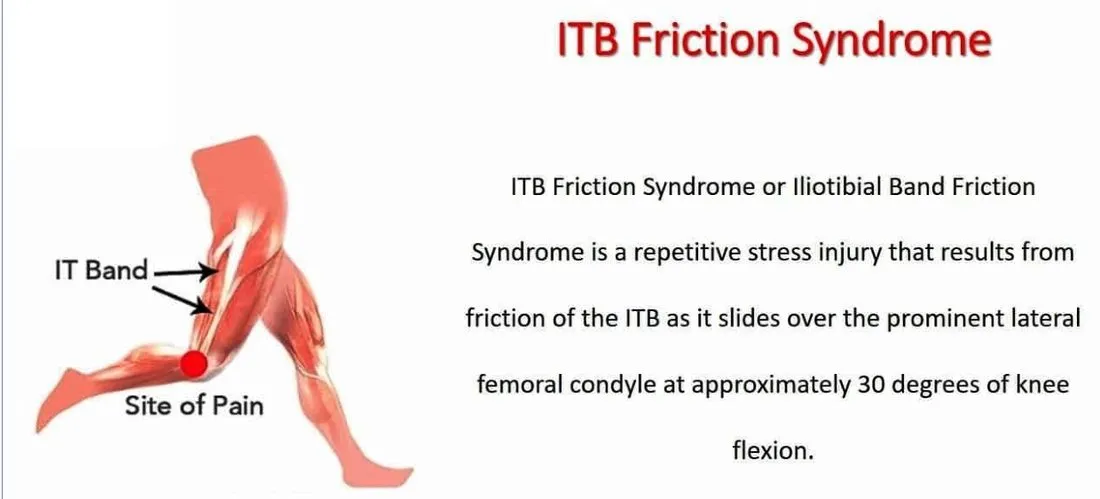
Slide 9’s first line says overuse injuries are “not representing a greater challenge” to the therapist, yet the same slide says their cause is “much less obvious”. The wording looks like a slip on the slide. The notes keep it as written, so check it with the lecturer before relying on it.
| Acute | Overuse | |
|---|---|---|
| Cause | Sudden trauma to the tissue | Repetitive loading of the tissue over a period of time |
| Symptoms | Present almost immediately | Present gradually |
| Cause of the injury | (in contrast) | Much less obvious than in acute injuries |
| Example on the slides | Hamstring strain in 100 meter sprinting | ITB syndrome in marathon runners |
Common acute and overuse injuries
| Common acute injuries | Common overuse injuries |
|---|---|
| SprainOverstretching or tearing of a ligament.General meaning, not from the slides | Patellofemoral dysfunctionA problem at the joint between the kneecap (patella) and the thigh bone, usually causing knee pain.General meaning, not from the slides |
| Strains | Medial tibial stress syndromeAn overuse condition causing pain along the inner edge of the shin bone.General meaning, not from the slides |
| FractureA break or crack in a bone.General meaning, not from the slides | Stress fractureA small crack in a bone caused by repeated loading rather than a single blow.General meaning, not from the slides |
| DislocationA joint forced out of its normal position so the bone ends no longer line up.General meaning, not from the slides | Iliotibial band syndrome |
- Distinguishing between overuse and acute injuries can be difficult.
- E.g. DOMSDelayed onset muscle soreness: muscle aching that develops some time after exercise.General meaning, not from the slides (DOMS) and BlisterA fluid-filled bubble under the skin caused by rubbing.General meaning, not from the slides are overuse injuries due to the mechanism of injury, although their symptoms present relatively quickly.
Acute vs overuse injuries by site
Slides 11-13 list the injuries at each site (one table split over three slides).
| Site | Acute injuries | Overuse injuries |
|---|---|---|
| Bone | Fracture (including Growth plateThe area of growing cartilage near the ends of a young person's long bones. It closes when growth is finished.General meaning, not from the slides); Periosteal contusionA bruise of the thin tissue covering the surface of a bone.General meaning, not from the slides | Stress injury (including stress reaction and stress fracture); OsteitisInflammation of bone.General meaning, not from the slides, PeriostitisInflammation of the thin covering of a bone (the periosteum).General meaning, not from the slides, ApophysitisIrritation of a growth area of bone where a tendon pulls on it, seen in growing young people.General meaning, not from the slides; Osteophyte (bone spur)A small bony outgrowth that forms at the edge of a bone or joint.General meaning, not from the slides/bone spur |
| Hyaline cartilageThe smooth, glassy cartilage that lines the ends of bones inside joints.General meaning, not from the slides | Chondral / osteochondral injuryDamage to joint cartilage (chondral), or to cartilage together with the bone beneath it (osteochondral).General meaning, not from the slides | ChondropathyDisease or damage of cartilage.General meaning, not from the slides (e.g. softening, Fibrillation (cartilage)Fraying of the cartilage surface into fine threads.General meaning, not from the slides, FissuringCracks forming in a tissue surface, here the cartilage.General meaning, not from the slides, ChondromalaciaSoftening of cartilage.General meaning, not from the slides) |
| Fat padA cushion of fatty tissue near a joint.General meaning, not from the slides | Bruise/ContusionA bruise caused by a direct blow.General meaning, not from the slides | ImpingementSoft tissue being pinched or squeezed between bones as a joint moves.General meaning, not from the slides/irritation |
| Skin | LacerationA cut or tear, in skin or in a tendon.General meaning, not from the slides; AbrasionA graze where the top layer of skin is scraped off.General meaning, not from the slides | Blister; CallusA patch of thickened, hard skin that forms from repeated rubbing or pressure.General meaning, not from the slides |
| FibrocartilageTough, fibrous cartilage, found for example in the knee menisci and spinal discs.General meaning, not from the slides | Acute tear (including MeniscusA C-shaped cartilage pad in the knee that cushions and steadies the joint.General meaning, not from the slides, LabrumThe ring of cartilage that deepens the socket of the shoulder or hip joint.General meaning, not from the slides, and intra-articular and Intervertebral discThe cushioning disc between two spinal bones (vertebrae).General meaning, not from the slides); HerniationInner material pushing out through its normal boundary, as when disc material bulges out.General meaning, not from the slides of Nucleus pulposusThe soft, jelly-like centre of a spinal disc.General meaning, not from the slides from intervertebral disc | Degenerative tearA tear caused by gradual wear over time rather than a single injury.General meaning, not from the slides; herniation of nucleus pulposus from intervertebral disc; chondropathy (e.g. softening, fibrillation, fissuring, chondromalacia) |
| Joint | Dislocation; SubluxationA partial dislocation, where the joint surfaces slip but stay partly in contact.General meaning, not from the slides | SynovitisInflammation of the joint lining (the synovium).General meaning, not from the slides; OsteoarthritisA wear-related joint condition in which cartilage thins and the joint becomes painful and stiff.General meaning, not from the slides; Instability (joint)A joint that gives way or moves more than it should.General meaning, not from the slides |
| LigamentA tough band of tissue that joins one bone to another and steadies a joint.General meaning, not from the slides | Sprain/tear (Grade (of sprain or strain)A scale for how badly a ligament or muscle is damaged, from grade I (least) up to grade III (most).General meaning, not from the slides) | InflammationThe body's reaction to irritation or injury, causing redness, heat, swelling and pain.General meaning, not from the slides |
| Muscle | Strain/tear; contusion; CrampA sudden, painful tightening of a muscle.General meaning, not from the slides; Compartment syndromeRaised pressure inside a closed muscle compartment, which squeezes blood vessels and nerves and causes pain.General meaning, not from the slides | Chronic compartment syndrome; delayed onset muscle soreness; FibrosisThickening and scarring of tissue.General meaning, not from the slides |
| TendonA tough cord that attaches a muscle to a bone.General meaning, not from the slides | Tear (partial or complete) | TendinopathyA general term for a painful, damaged tendon.General meaning, not from the slides (includes ParatenonitisInflammation of the thin layer of tissue around a tendon.General meaning, not from the slides, TenosynovitisInflammation of the sheath that surrounds a tendon.General meaning, not from the slides, TendinosisLong-standing breakdown inside a tendon with little inflammation.General meaning, not from the slides and TendinitisInflammation of a tendon.General meaning, not from the slides) |
| FasciaA sheet of connective tissue wrapped around muscles and other structures.General meaning, not from the slides | Tear (partial or complete) | FasciopathyA general term for a painful, damaged fascia.General meaning, not from the slides (includes FasciitisInflammation of a fascia.General meaning, not from the slides and FasciosisLong-standing breakdown of a fascia with little inflammation.General meaning, not from the slides) |
| BursaA small fluid-filled sac that reduces friction between moving structures.General meaning, not from the slides | BursitisInflammation of a bursa (bursosis is the long-standing form).General meaning, not from the slides | Bursitis/bursosis |
| Nerve | NeuropraxiaA mild nerve injury in which the nerve is bruised or stretched and temporarily stops working.General meaning, not from the slides | Nerve entrapmentA nerve being squeezed or trapped by surrounding tissue.General meaning, not from the slides; minor nerve injury/irritation; “Adverse” (the word is cut off at the edge of the slide 13 table) |
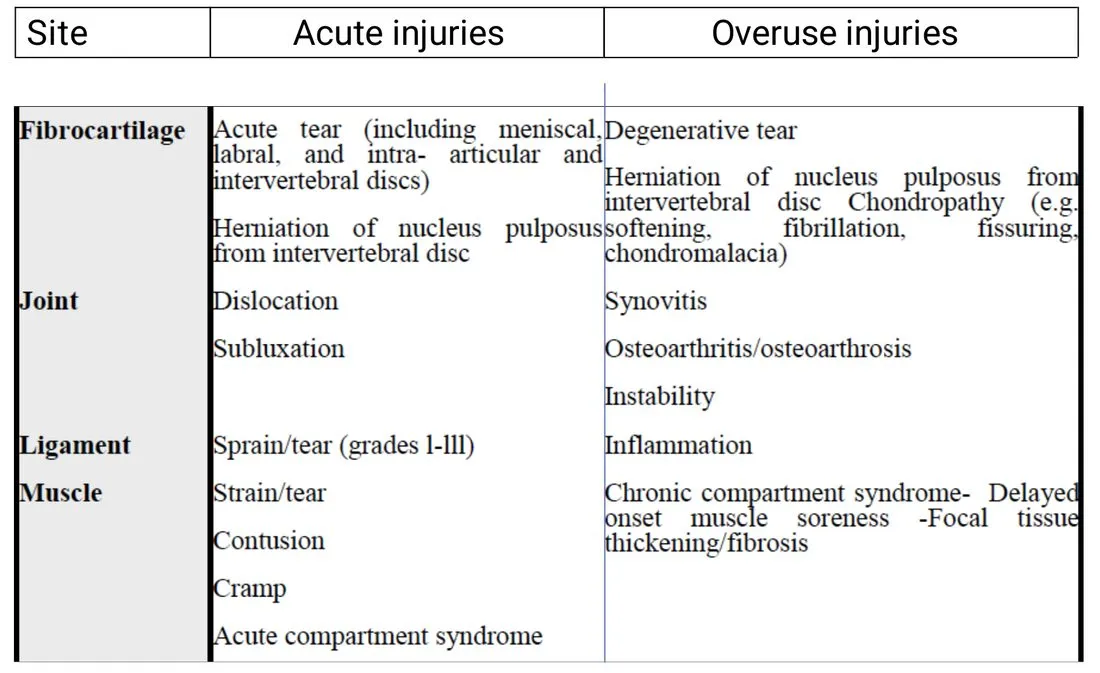
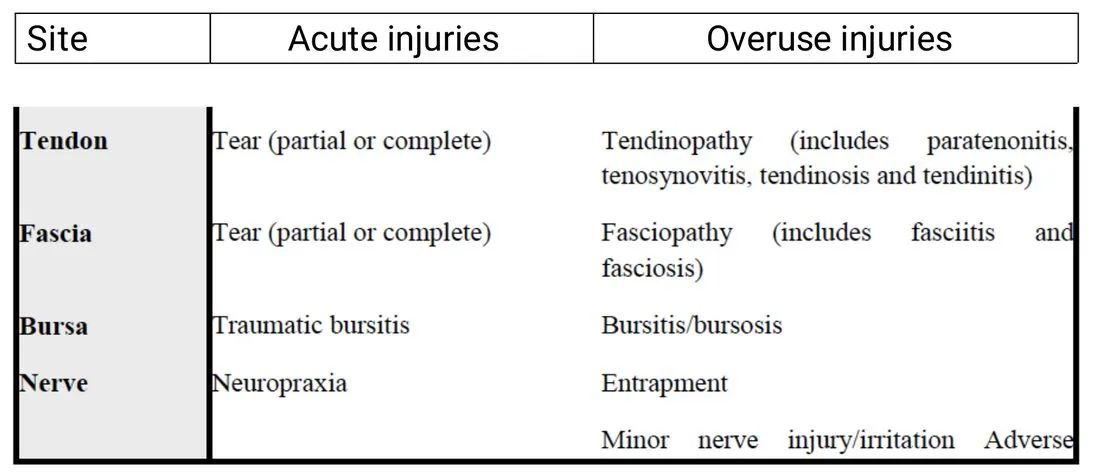
Slide 11’s overuse cells overlap and are hard to read on the slide (the bone entry runs over the next two rows). The text above was read from the slide’s text layer. On slide 12 the herniation of nucleus pulposus is listed under both acute and overuse for fibrocartilage, and the chondropathy line appears again in the fibrocartilage overuse cell, as on slide 11.
Tissue type
Sports injuries can be classified according to which tissue has become damaged. This allows sports therapists to identify Soft tissueIn this lecture: muscle, ligament, tendon, skin, deep fascia and fibrocartilage., Hard tissueIn this lecture: bone, joints and articular cartilage. and Special tissueIn this lecture: brain, peripheral nerves, eyes, nose, sinuses, teeth and blood vessels. injuries. On occasion, however, a sports injury can damage more than one tissue type.
| Tissue type | Examples |
|---|---|
| Soft | Muscle, ligament, tendon, skin, deep fascia, fibrocartilage |
| Hard | Bone, joints, Articular cartilageThe smooth cartilage covering the ends of bones inside a joint.General meaning, not from the slides |
| Special | Brain, Peripheral nervesThe nerves outside the brain and spinal cord.General meaning, not from the slides, eyes, nose, sinuses organs (as written on the slide), teeth, blood vessels |
Using this classification:
- Muscle strain is a soft tissue injury.
- Fracture is a hard tissue injury.
- ConcussionA brain injury from a blow or shake that temporarily disturbs how the brain works.General meaning, not from the slides is a special tissue injury.
Healing rates of tissues
Slide 16 is Table 13, “Healing Rates of Tissues”. Each tissue has an arrow across the time columns (0-3 days, 4-14 days, 3-4 weeks, 5-7 weeks, 2-3 months, 3-6 months, 6 months-1 year, up to 2 years). The slide gives no other text, so this table reads off where each arrow starts and ends.
| Tissue | Arrow starts in column | Arrow ends in column |
|---|---|---|
| Tendon: tendinitis | 3-4 weeks | 5-7 weeks |
| Tendon: lacerations | 5-7 weeks | 3-6 months |
| Muscle: exercise-induced | 0-3 days | 4-14 days |
| Muscle: grade I | 0-3 days | 3-4 weeks |
| Muscle: grade II | 4-14 days | 2-3 months |
| Muscle: grade III | 3-4 weeks | 3-6 months |
| Ligament: grade I | 0-3 days | 4-14 days |
| Ligament: grade II | 3-4 weeks | 3-6 months |
| Ligament: grade III | 5-7 weeks | 6 months-1 year |
| Ligament graftTissue used to replace or rebuild a damaged ligament.General meaning, not from the slides | 2-3 months | Up to 2 years |
| Bone | 5-7 weeks | 2-3 months |
| Articular cartilage repair | 2-3 months | Up to 2 years |
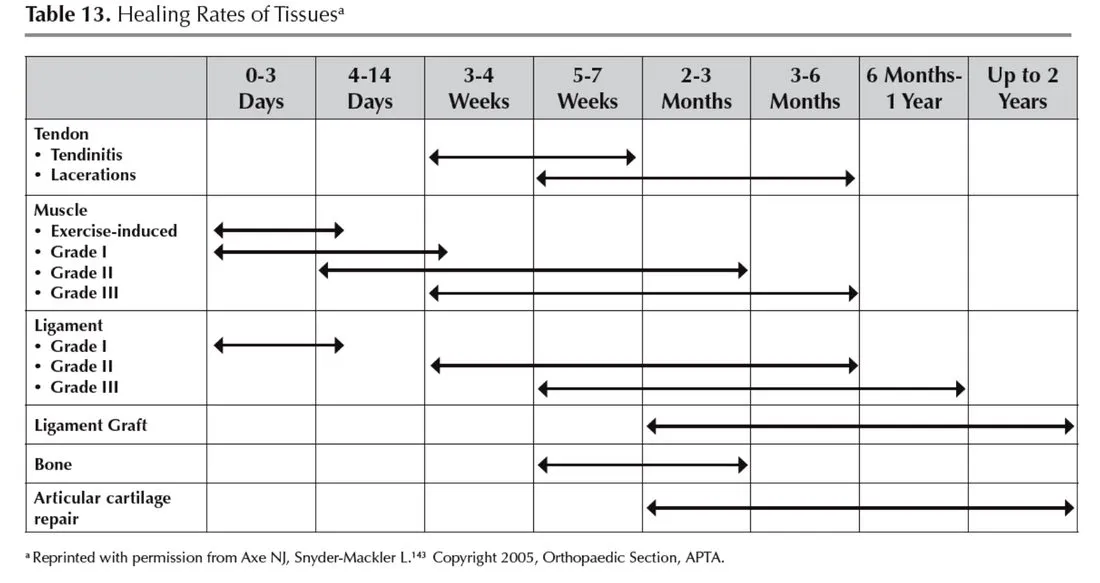
Source on the slide: reprinted with permission from Axe NJ, Snyder-Mackler L. Copyright 2005, Orthopaedic Section, APTA.
Severity
Most sports injuries require a period of time where participation is reduced or ceased due to symptoms. So injuries can also be classified by how long the symptoms present themselves, which lets a sports therapist describe injuries as mild, moderate and severe.
| Severity | Usually lasts | Examples |
|---|---|---|
| Mild | 1-7 days | HematomaA collection of blood outside the blood vessels, forming a bruise or swelling.General meaning, not from the slides, blisters, DOMS |
| Moderate | 8-20 days | Low-grade muscle strains and ligament sprains |
| Severe | 21 days, but can lead to permanent damage | Fractures and high-grade strains and sprains |
Causes of sports injuries
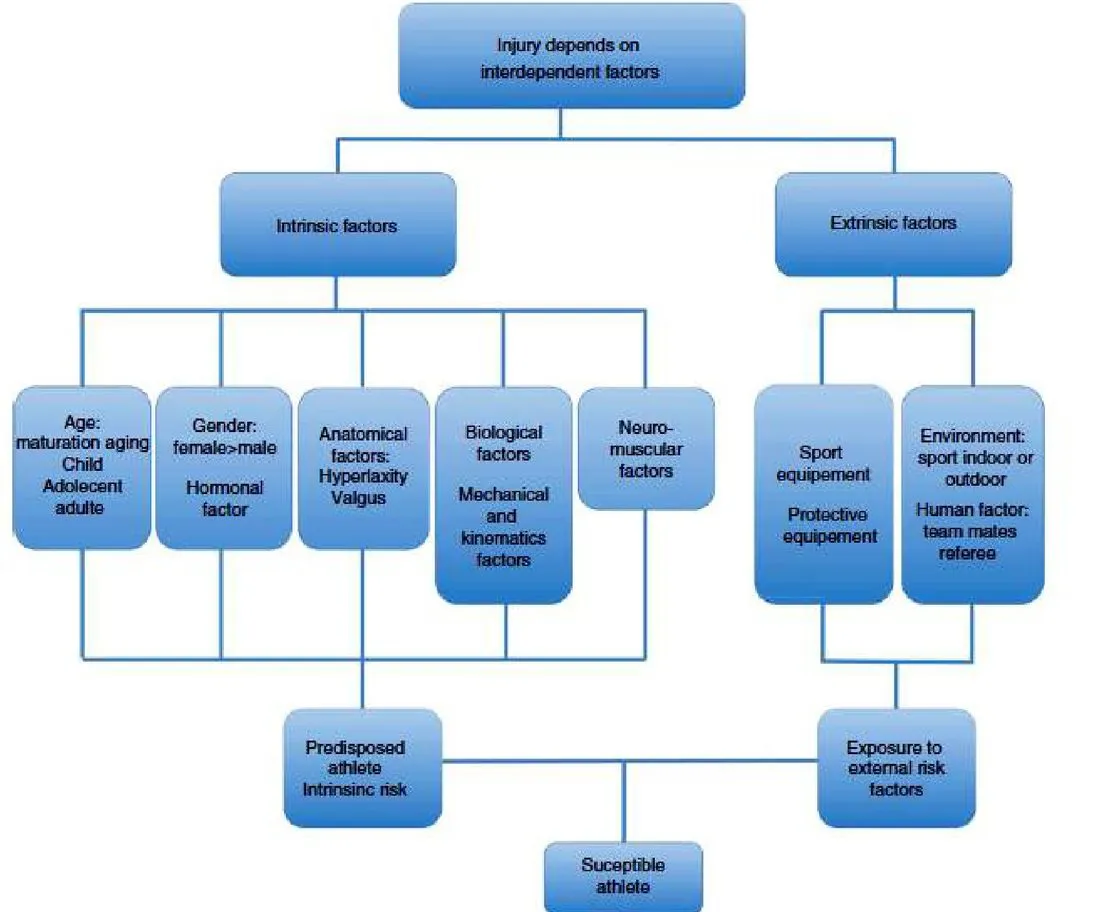
The type of injury depends on numerous interdependent factors, which can be divided into two main causes:
| Intrinsic factorsRisk factors from within the athlete: biological characteristics, anatomical factors, sex, age and stage of development. | Extrinsic factorsRisk factors linked to the practice of the sport itself and the environment where it is practiced. | |
|---|---|---|
| What they are | Biological characteristics, anatomical factors, sex, age, and stage of development in adolescents, which favor the practice of one sport rather than another | Linked to the practice of sports itself and the environment where it is practiced |
The factors chart (slides 20-23)
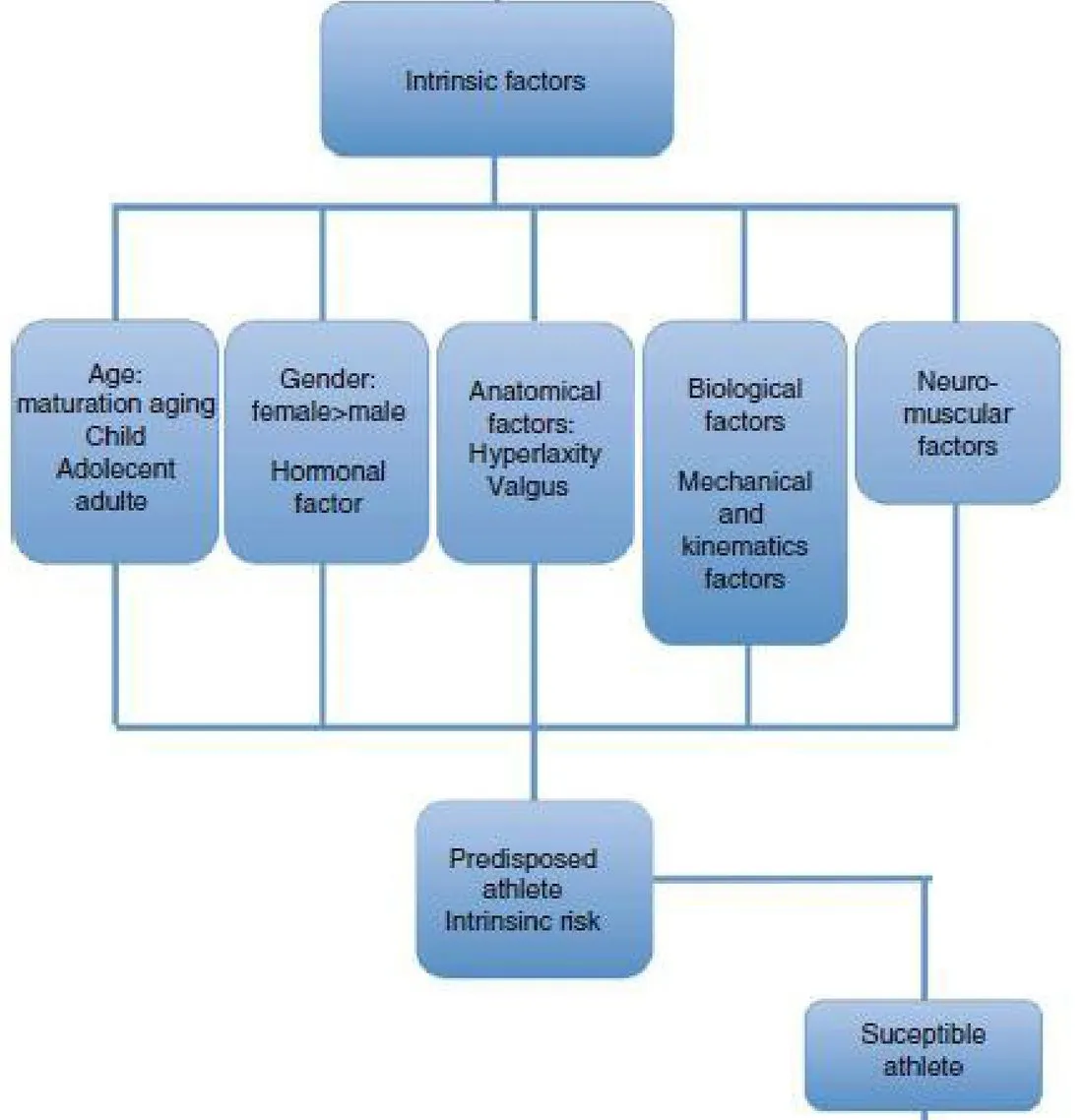
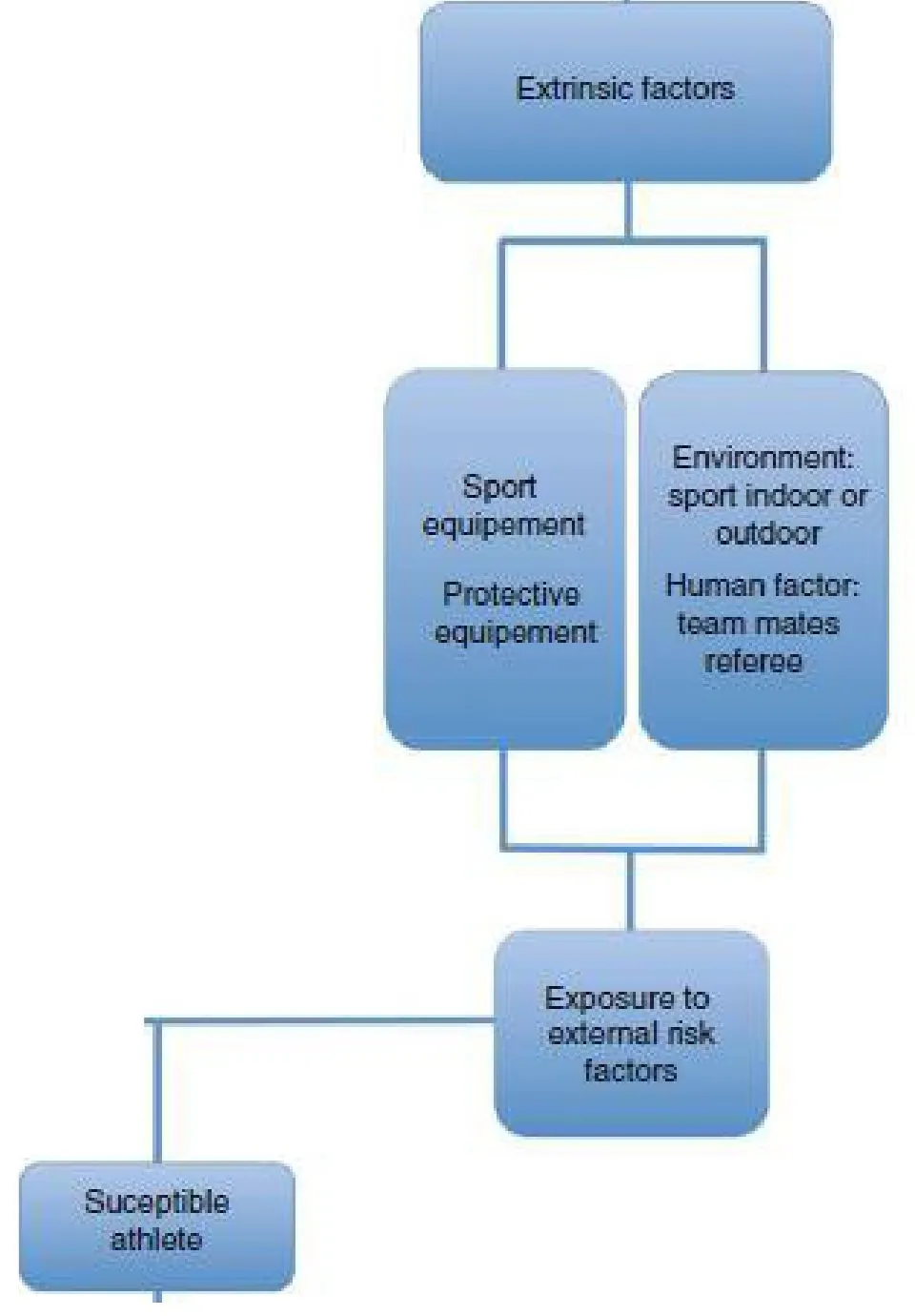
Slide 20 shows “injury depends on interdependent factors” splitting into intrinsic and extrinsic factors. Slides 21-23 fill in the boxes.
| Intrinsic factors (slide 21) | Listed in the box |
|---|---|
| Age | Maturation, aging; child; adolescent; adult |
| Gender | Female > male; Hormonal factorA risk factor linked to the body's hormone levels.General meaning, not from the slides |
| Anatomical factors | HyperlaxityUnusually loose joints that move further than normal.General meaning, not from the slides; ValgusA deformity where the part beyond the joint angles away from the body's midline, like knock-knees at the knee.General meaning, not from the slides |
| Biological factors | Mechanical and KinematicsHow the body moves, described without looking at the forces that cause the movement.General meaning, not from the slides factors |
| NeuromuscularInvolving the nerves and muscles working together.General meaning, not from the slides factors | (no sub-items) |
| Extrinsic factors (slide 22) | Listed in the box |
|---|---|
| Sport equipment | Protective equipment |
| Environment | Sport indoor or outdoor |
| Human factor | Team mates, referee |
How the chart flows (slide 23):
- The intrinsic factors lead to the Predisposed athleteIn the factors chart, an athlete whose intrinsic factors make injury more likely.General meaning, not from the slides (intrinsic risk).
- The extrinsic factors lead to ExposureHow much an athlete is actually in play, and so open to the risks of the sport.General meaning, not from the slides to external risk factors.
- Both lead to the Susceptible athleteIn the factors chart, the athlete who is at risk once intrinsic risk and exposure to external risk factors combine.General meaning, not from the slides.
Memory hook: intrinsic = from the athlete (biology, anatomy, sex, age); extrinsic = from the sport and where it is played.
Intrinsic risk factors
Age
- Age is one of the most well-known factors, in particular at the two ends of the spectrum. On the other hand, during childhood and adolescence the risk of MusculoskeletalRelating to the muscles, bones, joints and the tissues that connect them.General meaning, not from the slides injury is high.
- The Growth plateThe area of growing cartilage near the ends of a young person's long bones. It closes when growth is finished.General meaning, not from the slides has not closed, and accidental injury to growing bones (knee, ankle, back, etc.) is frequent and potentially serious.
- Athletes are highly motivated to be successful, in particular during adolescence and young adulthood, which are periods of physical development.
- Most injuries in any sports occurred in adolescents or young adults, and the risk of injury decreased with age.
Also listed on slide 25 (no heading on the slide):
- Falls on outstretched hands
- Fragile upper extremity EpiphysisThe rounded end of a long bone. In growing people it develops from its own growth centre.General meaning, not from the slides
- Increased ball-head weight ratio
- Insufficient experience in heading ball
- Mechanical weakness of growing dental tissue
Slide 24 says age matters “at the two ends of the spectrum” but only describes the young end; slide 25 says the risk of injury decreased with age. The slides give no detail on the older end.
Anatomic consideration
- Women have shorter legs than men, as well as greater hip VarusA deformity where the part beyond the joint angles toward the body's midline, like bow-legs at the knee.General meaning, not from the slides, knee ValgusA deformity where the part beyond the joint angles away from the body's midline, like knock-knees at the knee.General meaning, not from the slides, Ligamentous laxityLooseness of the ligaments, so the joints move more than normal.General meaning, not from the slides and thinner LigamentA tough band of tissue that joins one bone to another and steadies a joint.General meaning, not from the slides.
- Smaller ligaments have less material strength than larger ligaments and should rupture sooner under similar loading conditions.
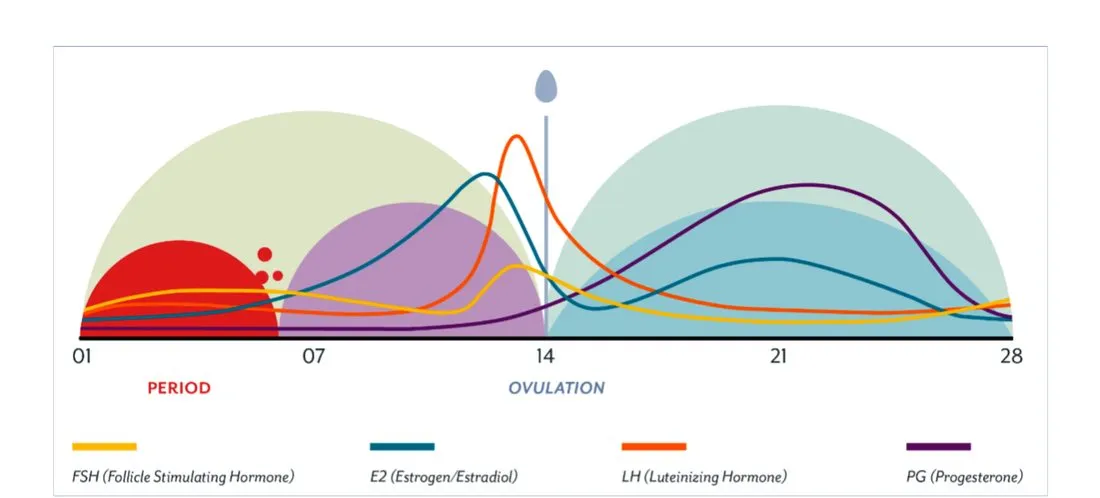
Slide 26 also shows a graph of hormone levels across a 28-day cycle (FSHFollicle stimulating hormone, one of the four hormones plotted on the slide 26 graph.General meaning, not from the slides, E2Estrogen (estradiol), one of the four hormones plotted on the slide 26 graph.General meaning, not from the slides, LHLuteinizing hormone, one of the four hormones plotted on the slide 26 graph.General meaning, not from the slides, PGProgesterone, one of the four hormones plotted on the slide 26 graph.General meaning, not from the slides; “period” and “OvulationThe release of an egg from the ovary, marked on the slide 26 graph.General meaning, not from the slides” marked), with no text explaining it.
Neuromuscular factors
- Women athletes respond to Anterior tibial translationForward sliding of the shin bone (tibia) relative to the thigh bone.General meaning, not from the slides by activating their QuadricepsThe large muscle group at the front of the thigh that straightens the knee.General meaning, not from the slides rather than HamstringsThe muscle group at the back of the thigh that bends the knee.General meaning, not from the slides.
- Women land from a jump, and cut or pivot, with less hip and knee FlexionBending a joint so the angle between the bones gets smaller.General meaning, not from the slides than men do.
- Female athletes tend to be quadriceps dominant in both strength and muscle firing patterns.
- Women have a lower EccentricA muscle contraction in which the muscle lengthens while it works, like lowering a weight.General meaning, not from the slides hamstring to eccentric quadriceps muscle ratio than men do. This strength imbalance may help to explain higher ligament injury rates in female athletes.
Injury history
- It has been suggested that individuals with previous injuries are at a high risk of recurrence.
- Listed on the slide under this statement: incomplete RehabilitationTreatment and exercise that restore function after injury.General meaning, not from the slides; residual mechanical Instability (joint)A joint that gives way or moves more than it should.General meaning, not from the slides.
- In summary, previous injuries may not necessarily cause repetition injury if treated adequately, but certain individuals may be at a higher risk of injury due to injury-prone biological characteristics.
Body size
- Weakness of motor ability skills and lack of strength were proposed as risk factors for injury in soccer.
- Excessive height and weight have been shown to predispose to Stress injury (bone)Bone overload from repeated loading, ranging from an early stress reaction to a stress fracture.General meaning, not from the slides in physical training.
- The relationship between body size and injuries may be due to the high position of the Center of gravityThe point around which the body's weight is balanced.General meaning, not from the slides or to the length of the limbs. Greater limb length could produce greater leverage and thus more stress on the limb joints in situations that require rapid change of direction.
Local anatomy and biomechanics
- IdiopathicOf unknown cause.General meaning, not from the slides or acquired abnormal anatomy or biomechanics in any joint may lead to a local injury.
- Marked Leg length inequalityOne leg being longer than the other.General meaning, not from the slides may cause musculoskeletal problems in the lower limbs or in the Vertebral columnThe spine.General meaning, not from the slides.
- An IncidenceThe rate of injuries in a given time frame in a given population, usually counted as new injuries per 1000 hours of participation. of Pars interarticularisA small bridge of bone in the back part of a spinal vertebra.General meaning, not from the slides defects 4 times that of controls has been reported in young female gymnasts “due to differences in knee anatomy”.
Possible slide error: a pars interarticularis defect is a spine finding, so “differences in knee anatomy” looks out of place. The notes keep the slide’s wording.
Muscle strength, imbalance and tightness
- An imbalance between load capacity and load, or muscle weakness, may lead to musculoskeletal injury.
- The strength of surrounding muscles is also closely associated with looseness of a joint.
- Individuals with differences in quadriceps strength greater than 10% between limbs were more likely to get knee injuries.
- H/Q ratioHamstring to quadriceps ratio: compares the strength of the muscles at the back of the thigh with those at the front.General meaning, not from the slides (H/Q) ratios lower than 60% can predispose an athlete to ACLAnterior cruciate ligament: a key knee ligament inside the joint that stops the shin bone sliding too far forward.General meaning, not from the slides injury.
- Muscle tightness has been related to StrainOverstretching or tearing of a muscle or its tendon.General meaning, not from the slides in soccer and American football.
- However, strength training programs and body conditioning improve not only muscle strength, but also aerobic fitness and body coordination.
Central motor control
- Beginners are at a higher risk of injury in many types of sport, due to lack of specific coordination needed in the type of activity.
- ConcussionA brain injury from a blow or shake that temporarily disturbs how the brain works.General meaning, not from the slides subjects have been slower in a Choice reaction testA test of how quickly a person responds when they must pick the right response among several.General meaning, not from the slides on average compared to controls, even after a good recovery from a SeverityHow serious an injury is. Here it is judged by how long the symptoms last: mild, moderate or severe. concussion.
- Central motor controlThe brain and spinal cord planning and coordinating movement.General meaning, not from the slides plays a major role in many types of recreational activity. It is reasonable to assume that poor central motor control plays a role in the outcome of an injury in sports.
Ligamentous laxity
- An increased likelihood of ligamentous rupture of the knee is reported in loose jointed professional football players.
- A three fold increased risk for non-contact ACL injury is likely in lax joint individuals.
Psychological factors
- Specific characteristics such as Locus of controlHow strongly a person believes they control what happens to them.General meaning, not from the slides, Trait anxietyA person's general, lasting tendency to feel anxious.General meaning, not from the slides and Self-conceptHow a person sees and judges themselves.General meaning, not from the slides have also been investigated with reference to athletic injuries.
- High competitive anxiety, low social support, a high anger trait and outward expression of anger seem to increase the risk of Sports injuryAny damage to tissues as a direct result of taking part in sport and exercise, which changes or stops how often or how hard you take part..
- Life event stressStress from major events in a person's life.General meaning, not from the slides reduces attention and mental performance. Therefore, it modified the reaction of the athlete in situations with a potential risk of injury.
- Social support appears to have a Buffering effectSocial support acts to reduce the effect of life events on the risk of injury., i.e. it acts to reduce the effect of life events on the risk of injury.
- Injured athletes demonstrate a more pronounced readiness to take risks (insufficient caution, adventurous spirit).
Extrinsic risk factors
Exposure
- Teams with a higher practice to game ratio had fewer injuries, possibly because of superior physical conditioning.
- Increasing experience might be related to increased risk of injury through repetitive cumulative trauma. More experienced players play more of the game and thus have a greater opportunity to be injured.
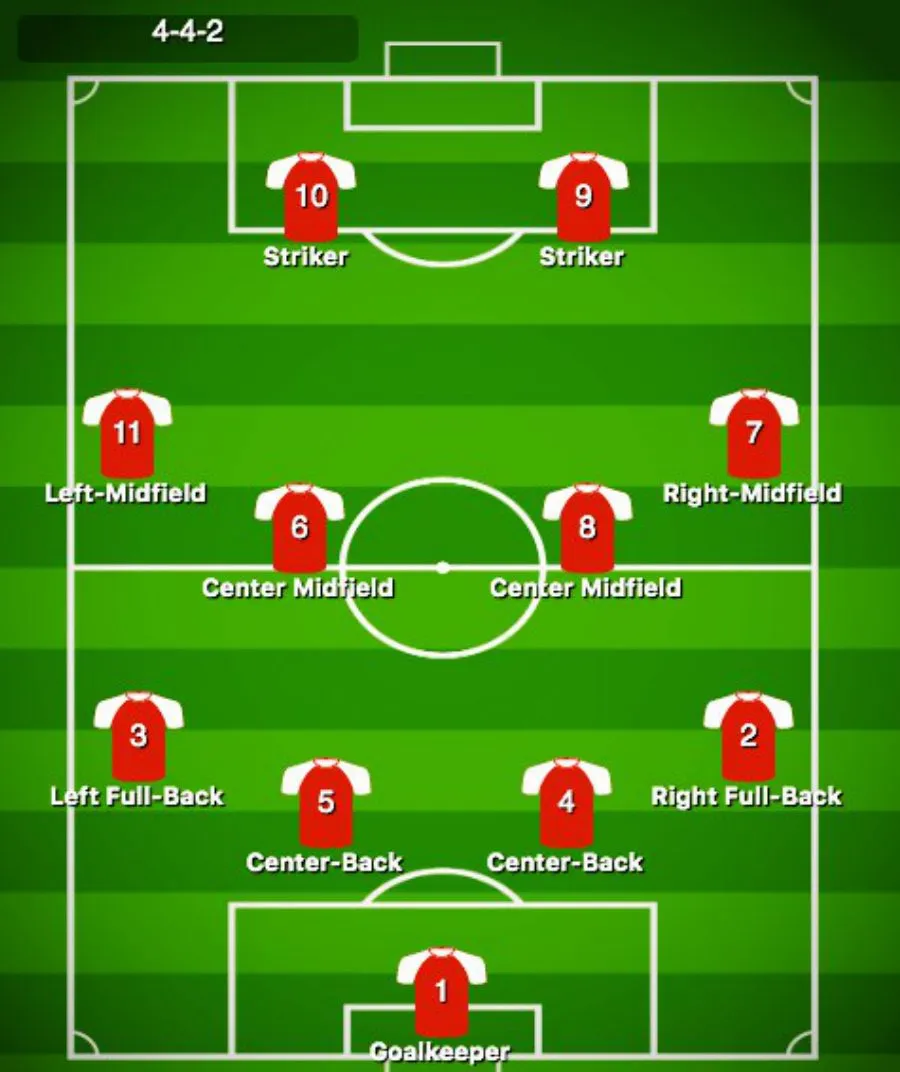
- Players are exposed to different situations based upon their relative field positions. Slide 38 shows a 4-4-2 formation with the positions labelled.
- Goalkeepers sustain more injuries than the remainder of positions, and midfielders had a low injury number.
- More injuries occurred in the opponents’ half of the field. This might be explained by the greater ExposureHow much an athlete is actually in play, and so open to the risks of the sport.General meaning, not from the slides to body contact injuries when attacking than when defending.
Slide 33 says beginners are at higher risk; slide 37 says increasing experience might be related to increased risk. Both are on the slides.
Environment
- Includes environmental temperature and the surface participation takes place on.
- Surfaces that are too hard or too soft can lead to excessive forces going through the body or a greater risk of SprainOverstretching or tearing of a ligament.General meaning, not from the slides, e.g. feet/legs stuck in wet turf.
- Uneven surfaces, such as cambered paths or roads, can increase forces placed through one side of the body.
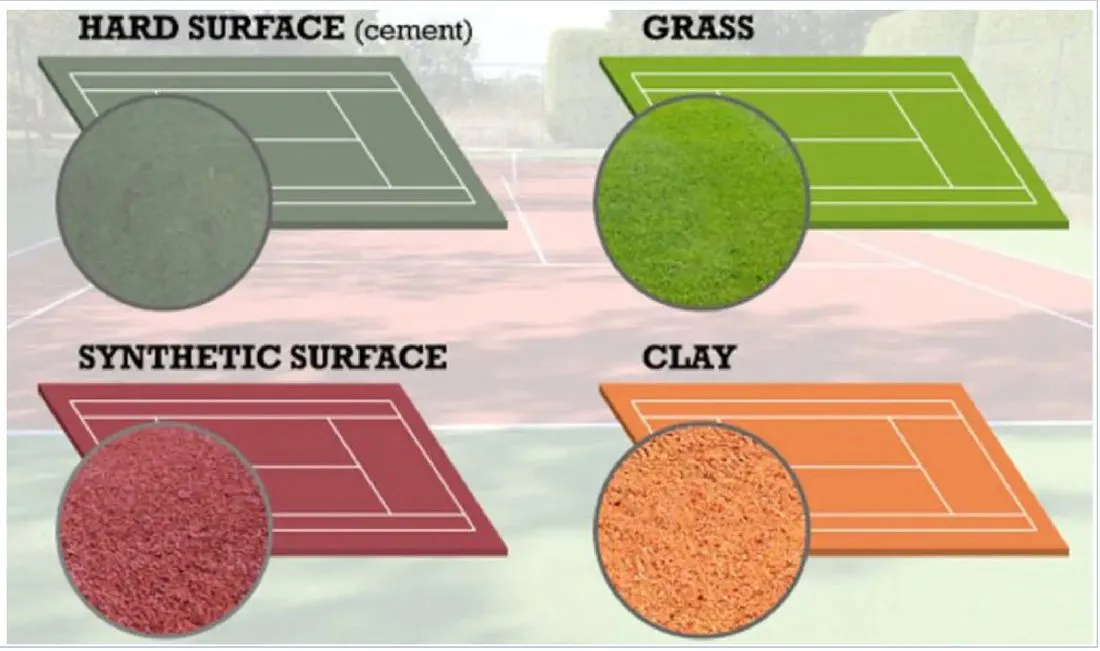
- The 2 main factors involved in surface-related injuries are surface stiffness and frictional forces between the surface and the shoe.
- Slide 41 labels four surfaces: hard surface (cement), grass, synthetic surface, clay.
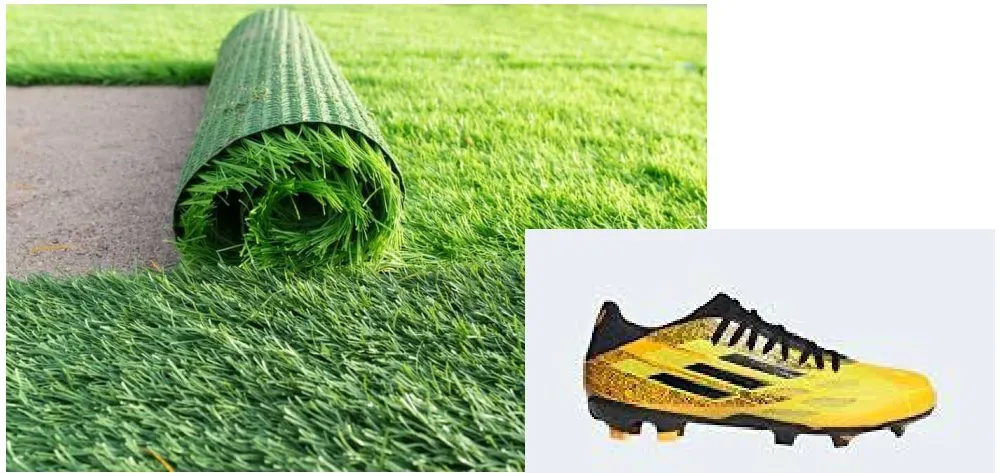
- The rate of injury occurrence on Artificial turfA synthetic grass-like playing surface.General meaning, not from the slides is higher than on natural grass or gravel surface.
- Cleats or studsProtrusions on the sole of a shoe that provide additional traction on a soft or slippery surface.: protrusions on the sole of a shoe that provide additional traction on a soft or slippery surface.
- Playing with cleated and higher Torsional resistanceHow strongly a shoe sole resists twisting.General meaning, not from the slides shoes on artificial turf is associated with an increased number of injuries.
- Injuries on natural grass occurred in dry weather conditions of high evaporation and low rainfall, where grounds may be expected to be hard during periods of the season.
Coaching
- Poor coaching/leadership – communication – ensuring adherence to rules – qualified and appropriate activities.
Footwear
- Inappropriate running shoes.
- Worn-out shoes.
- The soles should be flexible around the Metatarsophalangeal jointsThe joints where the long foot bones meet the toes, at the ball of the foot.General meaning, not from the slides and have torsional stability. Friction resistance should be kept to a minimum.
- OrthosisA brace or support worn to protect or support a body part.General meaning, not from the slides is known to prevent LCLLateral collateral ligament: the knee ligament on the outer side of the joint.General meaning, not from the slides and MCLMedial collateral ligament: the knee ligament on the inner side of the joint.General meaning, not from the slides injuries in contact sports.
- Such orthosis have not been proven effective in non-contact sports in general or for ACLAnterior cruciate ligament: a key knee ligament inside the joint that stops the shin bone sliding too far forward.General meaning, not from the slides in particular.
Training-related factors
- Relate to the design of training programs.
- Excessive Repetitive loadingPutting the same stress through a tissue again and again.General meaning, not from the slides of the tissues is needed for successful AdaptationThe tissue's gradual strengthening in response to repeated loading.General meaning, not from the slides. However, without suitable recovery, tissues never have the chance to adapt and can fail.
- A sudden increase in frequency, intensity and duration, or simply changing the training method, can go beyond the tissues’ fail tolerance level, leading to increased risk of injury.
- Performing techniques poorly can also place excessive StrainOverstretching or tearing of a muscle or its tendon.General meaning, not from the slides on tissues. E.g. poor shot technique in tennis increases the risk of Tennis elbowOveruse elbow pain: tennis elbow on the outer side of the elbow, golfer's elbow on the inner side.General meaning, not from the slides.
Nutritional factors
- Include adequate GlycogenThe body's stored carbohydrate, used as fuel by muscles.General meaning, not from the slides, hydration and protein intake.
- Inadequate glycogen stores reduce the time taken to become fatigued.
- Correct hydration reduces the effect of DehydrationNot having enough water in the body.General meaning, not from the slides, prevents HyponatremiaDangerously low sodium level in the blood.General meaning, not from the slides and overheating of the body.
- Without correct protein intake, an individual’s Soft tissueIn this lecture: muscle, ligament, tendon, skin, deep fascia and fibrocartilage. may not recover or adapt properly, and can lead to DOMSDelayed onset muscle soreness: muscle aching that develops some time after exercise.General meaning, not from the slides and Overtraining syndromeA lasting drop in performance and ongoing fatigue from training too hard with too little recovery.General meaning, not from the slides.
Detecting injuries
To detect injuries the Sports therapistA health professional who helps assess, treat and prevent injuries in people who play sport or exercise.General meaning, not from the slides should:
- Take a careful history.
- Note any “Red flagA finding that may indicate the need for further evaluation and diagnostic testing.” findings that may indicate the need for further evaluation and diagnostic testing.
- Be aware of the proper examination procedures.
- Be aware of the Clinical practice guidelinesWritten recommendations on how to assess and manage a condition.General meaning, not from the slides for each body region.
- Use the tools available to help guide the therapist in the decision-making process (next slides: the Canadian Cervical Spine RuleA decision rule used after neck injury to decide whether the patient needs a neck radiograph.General meaning, not from the slides, the Ottawa knee rulesA rule saying a knee radiograph is only needed after an acute knee injury with one or more listed findings. (OKRs) and the Ottawa ankle rulesA rule saying that if any listed finding is present, a radiograph is needed to look for a fracture. (OARs)).
The Canadian Cervical Spine Rule
Slide 47 is a flowchart with three questions.
| Step | Question | Criteria | Answer |
|---|---|---|---|
| 1 | Any high-risk factors which mandate Radiograph (X-ray)An X-ray image.General meaning, not from the slides? | Age ≥ 65, or Dangerous mechanismIn the Canadian rule: a fall from height, axial load to the head, high-speed collision, motorized recreation vehicle, or bicycle collision.*, or ParesthesiaTingling or pins-and-needles feeling.General meaning, not from the slides in extremities | No → go to step 2 |
| 2 | Any low-risk factor which allows safe ROMRange of motion: how far a joint can move.General meaning, not from the slides assessment? | Simple rear-end MVCMotor vehicle collision. (MVC)**; or sitting position in EDEmergency department.General meaning, not from the slides; or AmbulatoryAble to walk.General meaning, not from the slides at any time; or delayed onset of neck pain***; or absence of Midline c-spine tendernessPain when pressing along the middle line of the back of the neck.General meaning, not from the slides | Yes → go to step 3 |
| 3 | Able to actively rotate neck? | 45 degrees left and right | Able → no radiography |
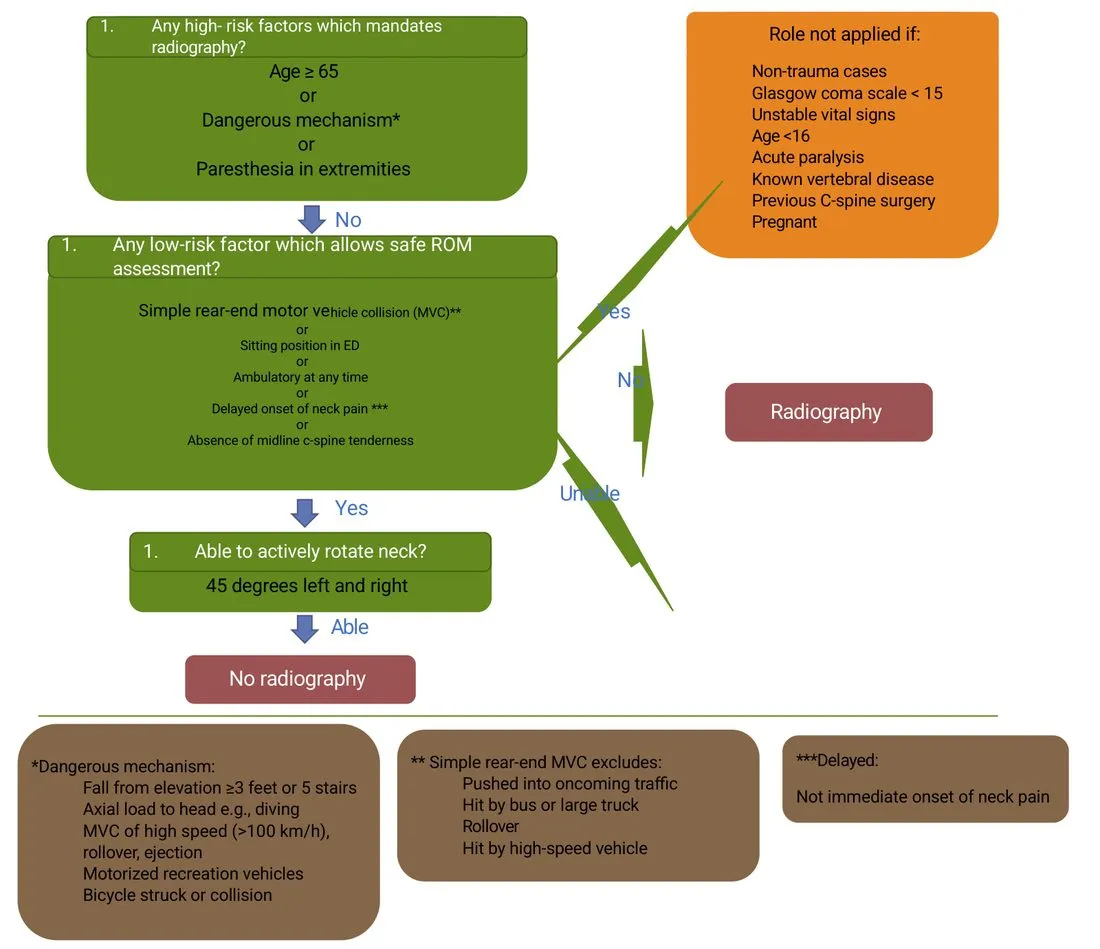
The arrows labelled Yes, No and Unable lead to the Radiography box.
How to read the flowchart: the arrows into “Radiography” are drawn untidily on the slide. Read with the three questions, they match: Yes (a high-risk factor is present), No (no low-risk factor allows safe ROM assessment) and Unable (cannot rotate the neck 45 degrees left and right).
Rule not applied if: non-trauma cases; Glasgow coma scaleA score of how awake and responsive a person is after a head injury.General meaning, not from the slides < 15; unstable Vital signsBasic body measures such as pulse, blood pressure and breathing.General meaning, not from the slides; age < 16; Acute paralysisSudden loss of the ability to move a body part.General meaning, not from the slides; known vertebral disease; previous Cervical spine (C-spine)The neck part of the spine.General meaning, not from the slides surgery; pregnant.
Footnotes on the slide:
- *Dangerous mechanism: fall from elevation ≥ 3 feet or 5 stairs; Axial loadForce pressing straight down along the spine, as when landing on the head in diving.General meaning, not from the slides to head e.g. diving; MVC of high speed (> 100 km/h), rollover, ejection; motorized recreation vehicles; bicycle struck or collision.
- **Simple rear-end MVC excludes: pushed into oncoming traffic; hit by bus or large truck; rollover; hit by high-speed vehicle.
- ***Delayed: not immediate onset of neck pain.
Ottawa knee rules (OKRs)
A knee radiograph is only required for a patient with an Acute injuryInjury due to sudden trauma to the tissue, with symptoms presenting almost immediately. knee injury with one or more of the following findings:
- Aged 55 years or over
- Tenderness at the FibulaThe thinner bone on the outer side of the lower leg.General meaning, not from the slides
- Isolated tenderness of the PatellaThe kneecap.General meaning, not from the slides
- Inability to FlexionBending a joint so the angle between the bones gets smaller.General meaning, not from the slides the knee to 90 degrees
- Inability to Weight bearingPutting body weight through a leg, as in standing or taking steps.General meaning, not from the slides (defined as an inability to take four steps, i.e. two steps on each leg, regardless of limping) immediately and at presentation
The rule was found to be 100% SensitivityHow reliably a test picks up people who truly have the condition.General meaning, not from the slides for identifying FractureA break or crack in a bone.General meaning, not from the slides.
Ottawa ankle rules (OARs)
If any of the following are present, a radiograph is necessary to evaluate for fractures:
-
A. Bone tenderness in the MalleolusThe bony bump on each side of the ankle: the lateral one on the outer side, the medial one on the inner side.General meaning, not from the slides, along the medial and lateral malleoli, TalusThe ankle bone that sits between the shin bones and the heel bone.General meaning, not from the slides.
-
B. Bone tenderness specifically at the posterior edge or tip of the lateral malleolus (malleolar zone), the posterior edge or tip of the medial malleolus (malleolar zone), the base of the MetatarsalOne of the long bones of the midfoot that lead to the toes.General meaning, not from the slides (Midfoot zoneIn the Ottawa ankle rules, the middle-of-foot area that includes the base of the fifth metatarsal and the navicular.), or the NavicularA boat-shaped bone on the inner side of the midfoot.General meaning, not from the slides (midfoot zone).
-
C. Inability to weight bear immediately following the injury and during examination.
-
The ability to bear weight was the most reliable of the various indicators.
-
Issue with the rule: poor SpecificityHow reliably a test rules out people who do not have the condition.General meaning, not from the slides. The specificity is low (< 0.5), suggesting False positivesPositive results in people who do not actually have the condition.General meaning, not from the slides are high, resulting in many unnecessary radiographs.
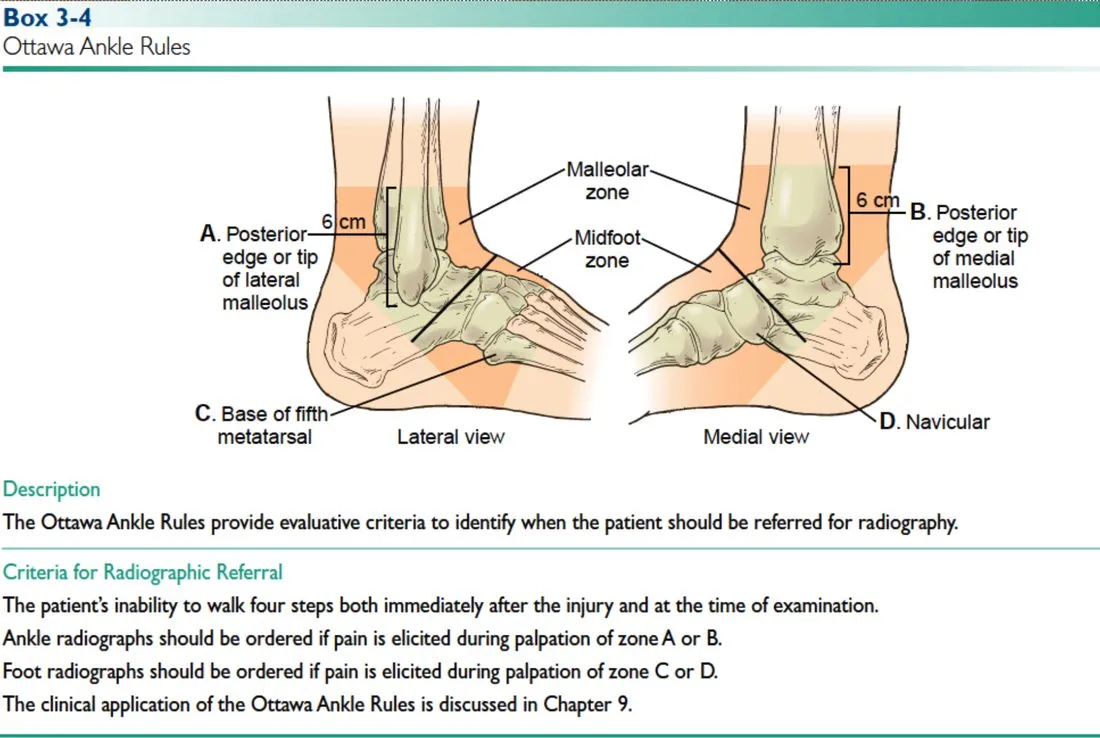
Slide 50 (Box 3-4) shows the zones on lateral and medial views of the foot, with 6 cm marked next to the malleoli. It uses its own letters:
| Zone (slide 50) | Site | Radiograph if pain on PalpationFeeling a body part with the hands to find tenderness or abnormalities.General meaning, not from the slides |
|---|---|---|
| A | Posterior edge or tip of the lateral malleolus (malleolar zone) | Ankle |
| B | Posterior edge or tip of the medial malleolus (malleolar zone) | Ankle |
| C | Base of fifth metatarsal (midfoot zone) | Foot |
| D | Navicular (midfoot zone) | Foot |
- Slide 50 also gives the walking criterion: the patient’s inability to walk four steps both immediately after the injury and at the time of examination.
The letters differ between slides: on slide 49, A and B are the malleolar-zone tenderness and the specific points, and C is weight bearing; on slide 50, A-D are four bone sites. Don’t mix the two schemes.
Preventing sports injuries
Why and how
- One of the most important roles of Sports therapistA health professional who helps assess, treat and prevent injuries in people who play sport or exercise.General meaning, not from the slides is preventing Sports injuryAny damage to tissues as a direct result of taking part in sport and exercise, which changes or stops how often or how hard you take part. and the physical, mental, social and financial harm that accompanies them.
| Primary preventative measuresMeasures that aim to reduce the occurrence of any injury within a sport or exercise. | Secondary preventative measuresMeasures where the therapist examines the injured athlete to reduce the risk of subsequent or secondary injuries. | |
|---|---|---|
| Aim | Reduce the occurrence of any injury within a sport/exercise | The sports therapist examines the injured athlete to work out how to reduce the risk of subsequent or secondary injuries |
Sequence of prevention
Any approach to prevent injury in an individual or team context should be sequential and follow these stages:
- Establish the extent of the problem: PrevalenceThe probability of already having the disease. It counts both new and old cases and does not need follow-up. of injuries, SeverityHow serious an injury is. Here it is judged by how long the symptoms last: mild, moderate or severe. of injuries, timings of injuries.
- Establish the AetiologyThe cause of an injury or illness.General meaning, not from the slides of injury: Intrinsic factorsRisk factors from within the athlete: biological characteristics, anatomical factors, sex, age and stage of development., Extrinsic factorsRisk factors linked to the practice of the sport itself and the environment where it is practiced..
- Introduce a preventative measure aimed at reducing the IncidenceThe rate of injuries in a given time frame in a given population, usually counted as new injuries per 1000 hours of participation. of injury.
- Evaluate the effectiveness of the preventative measure by repeating step one of the process.
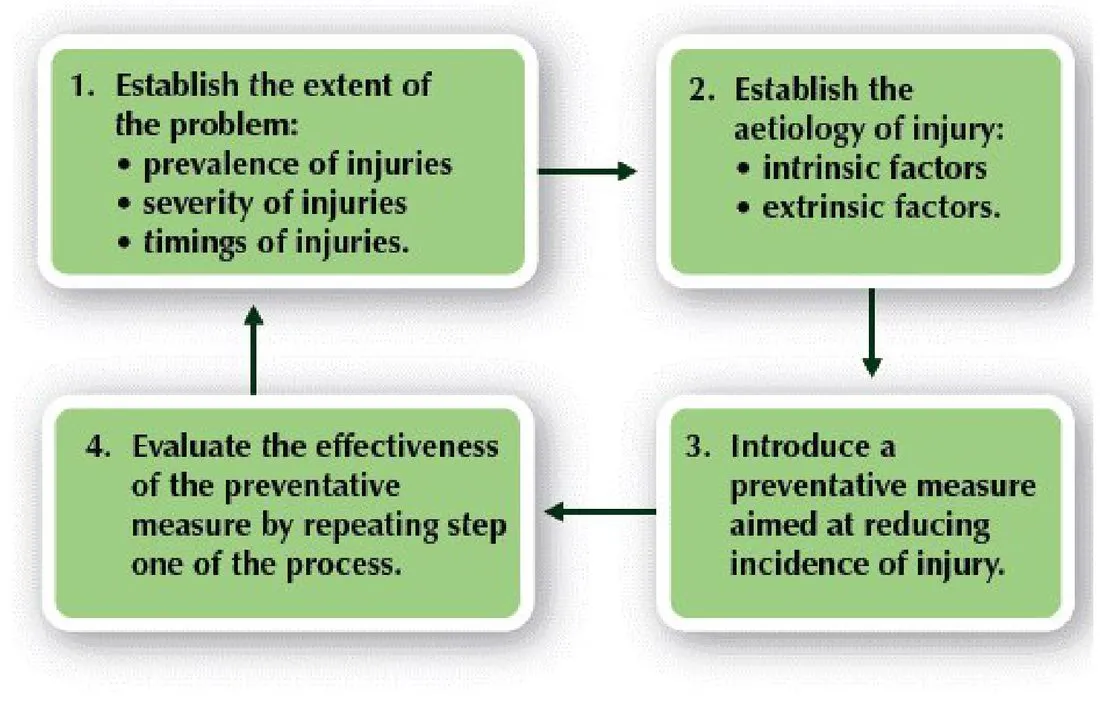
On the slide, arrows run 1 → 2 → 3 → 4 and back from 4 up to 1.
Warm-up and cool-down
A well-structured Warm-upPreparation before sport or exercise that readies the body physically and mentally.General meaning, not from the slides and Cool-downEasy activity after sport or exercise to aid recovery.General meaning, not from the slides is necessary to either prepare the individual physically and mentally or aid recovery from sport/exercise.
| A good warm-up | A good cool-down |
|---|---|
| Increases blood and nutrient flow to the muscles | Promotes Venous returnBlood flowing back to the heart through the veins.General meaning, not from the slides |
| Improves NeuromuscularInvolving the nerves and muscles working together.General meaning, not from the slides functioning | LactateA by-product of muscle energy use that builds up during hard exercise.General meaning, not from the slides removal |
| Disperses Synovial fluidThe slippery fluid inside joints that lubricates them.General meaning, not from the slides across joints, aiding movement | Improves flexibility |
| Mirrors sport-specific movements | Improves relaxation |
Stretching
- Although stretching has long been promoted as an injury prevention method, recent Systematic reviewA study that gathers and combines the results of all the research on a question.General meaning, not from the slides conclude that there is no evidence to support its efficacy.
- However, targeted stretching of Glenohumeral jointThe shoulder's ball-and-socket joint.General meaning, not from the slides Internal rotationTurning a limb inward toward the middle of the body.General meaning, not from the slides remains a popular prevention strategy in throwing athletes. It formed one part of a Multimodal trainingCombining several types of exercise in one program.General meaning, not from the slides training program shown to reduce the rate of Overuse injuryInjury that develops over a period of time, usually from repetitive loading of the tissue, with symptoms presenting gradually. shoulder injuries in elite handball players.
Structured training programs
- Structured warm-up programs consisting of strength and neuromuscular control exercises have been shown to halve the rate of lower limb overuse injuries among adolescent athletes.
- There is strong evidence that structured multimodal training programs targeting muscle strength and neuromuscular control are effective in preventing Acute injuryInjury due to sudden trauma to the tissue, with symptoms presenting almost immediately. lower limb injuries in team sports.
Planning a session
- Plan any training or RehabilitationTreatment and exercise that restore function after injury.General meaning, not from the slides program carefully, considering frequency, intensity, duration, and type of training method.
- Planned active or passive recovery allows tissue to repair without injury.
- Training and competition should take place on an appropriate surface that allows for the demands of the sport to be met and reduces the forces going through the body.
- All participants in a sport should be able to meet the demands of that sport or exercise.
- Individuals must be fit enough to train or compete, otherwise their tissues can fail.
- Regular fitness testing will ensure individuals have the basic fitness to participate safely and effectively.
Psychological training
- Some form of mental skills training and practice could reduce injury by reducing anxiety, improving Attentional focusHow well a person can concentrate on what matters.General meaning, not from the slides and allowing an athlete to achieve Optimal arousalThe best level of alertness and activation for performing well.General meaning, not from the slides for their sport.
Pre-participation functional training
- Keep the hip and knee bent during athletic activity: land on a bent knee and stop on a bent knee.
- Minimize the QuadricepsThe large muscle group at the front of the thigh that straightens the knee.General meaning, not from the slides’ ability to exert potentially injurious forces on the ACLAnterior cruciate ligament: a key knee ligament inside the joint that stops the shin bone sliding too far forward.General meaning, not from the slides (Quad-cruciate interactionThe quadriceps' ability to exert potentially injurious forces on the ACL.).
Taping and bracing
- Taping and bracingUsed to restrict undesired, potentially harmful motion and allow desired motion. are used to restrict undesired, potentially harmful motion and allow desired motion.
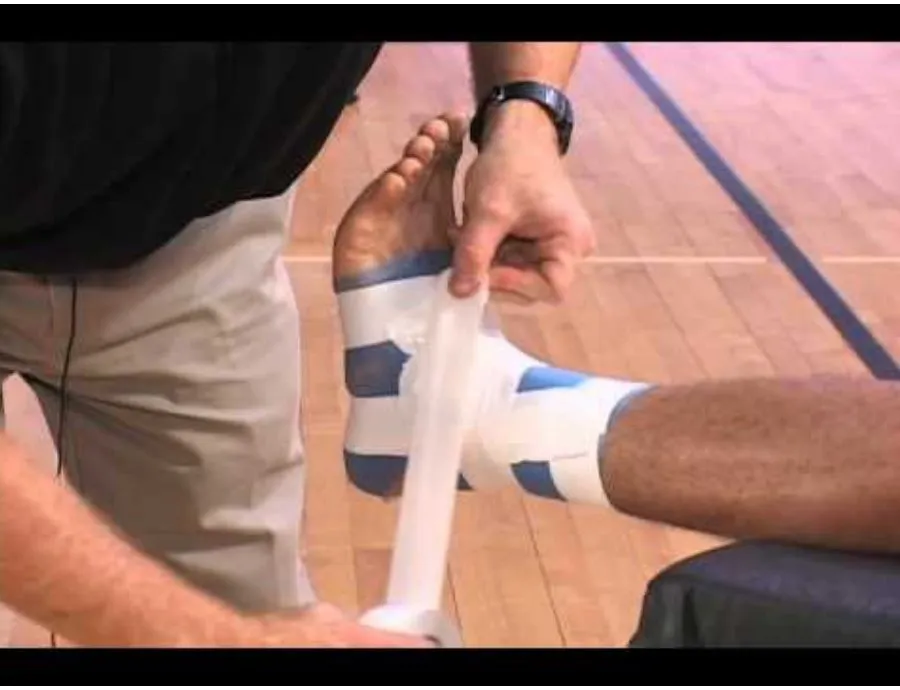
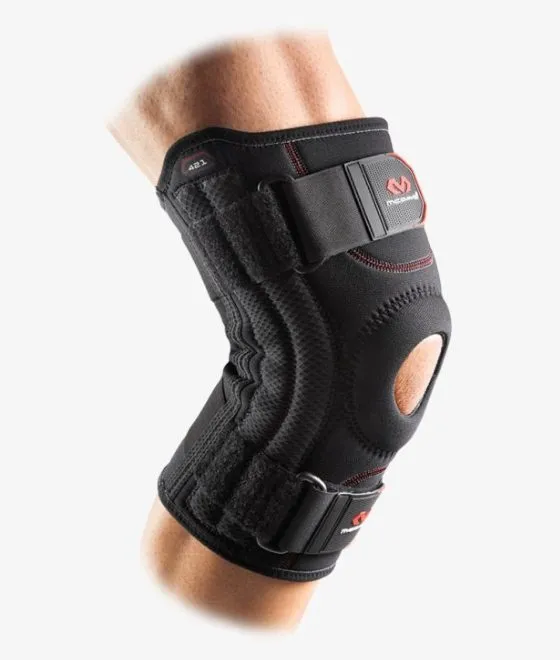
Indications for taping and bracing:
- Prevention: used as a preventive measure in high risk activities, e.g. basketball players’ ankles.
- Rehabilitation: used as a protective mechanism during the healing and rehabilitation phases.
Role of the coach
- The coach has a responsibility and need to provide a safe and healthy environment in all forms of physical activity.
- Through providing sport-specific knowledge with sport safety components, the coach can contribute greatly to the reduction of injury occurrence and severity.