Physical Therapy During and After Immobilization
Quiz this lecture (70 questions)This handout (Chapter 2) covers what ImmobilizationKeeping a body part still, for example with a cast, splint or bed rest, so that it can heal.General meaning, not from the slides does to every body system, the complications of fractures, the PTPhysical therapy (physiotherapy): treatment that uses exercise, movement and hands-on techniques to restore movement and function.General meaning, not from the slides goals and exercises during immobilization, the common problems after it and how to treat them (with elbow DislocationA joint whose bones have been forced out of their normal alignment.General meaning, not from the slides as a worked example), and how to prescribe exercise once the fracture has healed.
Learning Objectives
- Identify ImmobilizationKeeping a body part still, for example with a cast, splint or bed rest, so that it can heal.General meaning, not from the slides complications.
- Specify the goals of the PTPhysical therapy (physiotherapy): treatment that uses exercise, movement and hands-on techniques to restore movement and function.General meaning, not from the slides programme during immobilization.
- Conclude the exercises needed during immobilization.
- Differentiate the common problems after immobilization and how to treat them.
- Detect and specify the PT plan through specific models.
- Interpret exercise prescription after immobilization.
- Discriminate the different types of exercise programme.
Complications of Immobilization (by system)
OrthopaedicRelating to the bones, joints, muscles and other parts of the musculoskeletal system.General meaning, not from the slides patients are often ImmobilizationKeeping a body part still, for example with a cast, splint or bed rest, so that it can heal.General meaning, not from the slides, for a short or long time, because of fractures, road traffic accidents or surgery, and this leads to complications.
| System | Complications |
|---|---|
| MusculoskeletalRelating to the muscles, bones, joints and the tissues that connect them.General meaning, not from the slides | 1. Loss of muscle strength · 2. ContractureA fixed joint deformity from immobility, caused by the dynamic nature of connective tissue. and Soft tissueTissue that is not bone, such as muscle, tendon, ligament, fascia and skin.General meaning, not from the slides changes · 3. OsteoporosisLoss of bone density that leaves bones weak and fragile.General meaning, not from the slides and Degenerative joint diseaseGradual wear and breakdown of a joint's cartilage and bone, also known as osteoarthritis.General meaning, not from the slides |
| CardiovascularRelating to the heart and blood vessels.General meaning, not from the slides | 1. ↑ Heart rate · 2. ↓ Cardiac reserveThe extra work the heart can do above its resting level when the body needs it.General meaning, not from the slides · 3. Orthostatic hypotensionA drop in blood pressure on standing up from lying or sitting, which can cause dizziness.General meaning, not from the slides · 4. Venous thromboembolismBlood clots in the veins, including deep vein thrombosis and clots that travel to the lungs.General meaning, not from the slides · 5. Pressure soresDamage to the skin and tissue beneath it, caused by prolonged pressure.General meaning, not from the slides |
| RespiratoryRelating to breathing and the lungs.General meaning, not from the slides | 1. ↓ VentilationThe movement of air in and out of the lungs.General meaning, not from the slides · 2. AtelectasisCollapse of part of a lung, so that area cannot fill with air.General meaning, not from the slides · 3. PneumoniaAn infection of the lungs.General meaning, not from the slides |
| GenitourinaryRelating to the urinary system (kidneys and bladder) and the reproductive organs.General meaning, not from the slides | 1. Renal stonesHard mineral stones that form in the kidney.General meaning, not from the slides · 2. More frequent UTIUrinary tract infection: an infection of the bladder, kidneys or the tubes between them.General meaning, not from the slides |
| Central nervous systemThe brain and spinal cord.General meaning, not from the slides | Emotional and behavioural changes that can lead to DepressionPersistent low mood and loss of interest. In shoulder movement it also means pulling the shoulder blade downward.General meaning, not from the slides |
N.B. These complications are preventable. Prevention is easier than treatment for cost, for the patient’s health and for the healthcare facility. Preventing them is one of the major reasons for PTPhysical therapy (physiotherapy): treatment that uses exercise, movement and hands-on techniques to restore movement and function.General meaning, not from the slides during immobilization.
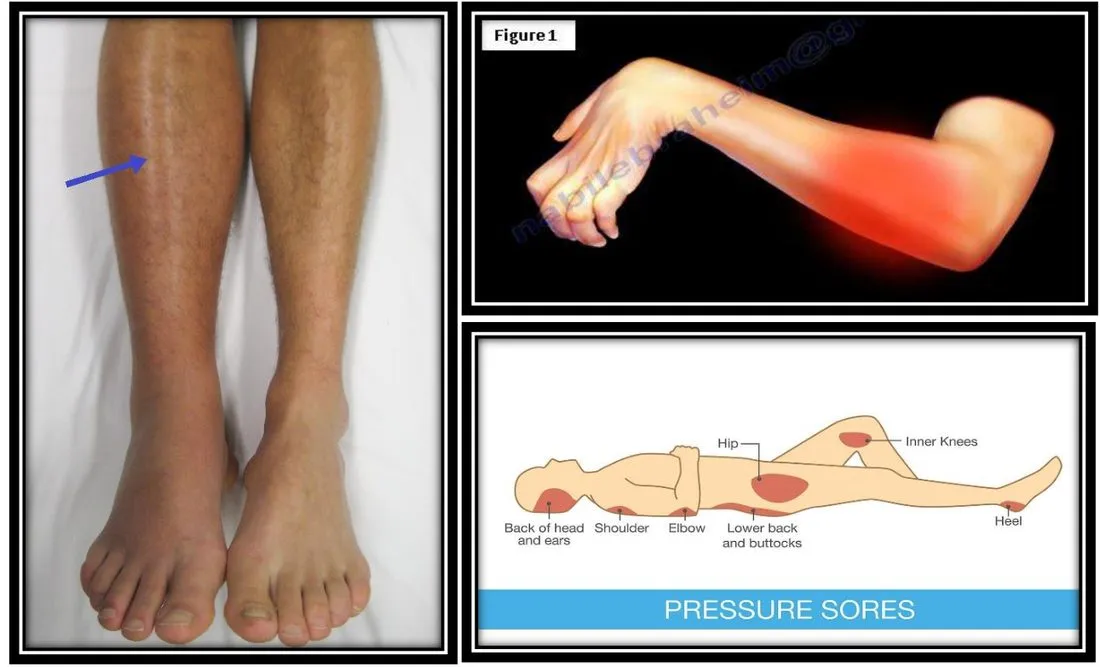
How immobilization affects each system
- Cardiovascular: deteriorates with prolonged bed rest.
- Respiratory: in bed, mucus collects under gravity and Tidal volumeThe amount of air breathed in and out in one normal breath.General meaning, not from the slides falls. DehydrationLoss of too much water from the body.General meaning, not from the slides makes it worse, because mucus thickens and is harder to cough up.
- Urinary: Urinary stasisSlow or stagnant flow of urine in the kidneys and bladder.General meaning, not from the slides in the kidneys and bladder lets bacteria grow, so UTI risk rises.
- Digestive:
- Reduced taste, smell and appetite lead to disuse of the gut, Mucosal atrophyThinning and shrinking of the moist lining (mucosa) of the gut.General meaning, not from the slides and shrinking glands. Reduced thirst easily leads to dehydration.
- Stomach transit is 66% slower SupineLying face up, on the back.General meaning, not from the slides than standing, which reduces appetite and PeristalsisThe wave-like muscle contractions that push food along the gut.General meaning, not from the slides; many patients get Gastro-oesophageal refluxStomach contents flowing back up into the oesophagus (the food pipe).General meaning, not from the slides.
- Constipation may be the main problem of immobilization, especially in the elderly. Causes: reduced bowel MotilityThe ability to move spontaneously; bowel motility is the movement of contents through the bowel.General meaning, not from the slides, too little fibre and fluid (AnorexiaLoss of appetite, or lack of desire to eat.General meaning, not from the slides), weak evacuation muscles, being unable to respond to the urge, and being unable to sit up.
Complications of Fractures
| General complications | Early (local) complications |
|---|---|
| 1. ShockA dangerous state in which too little blood reaches the body's organs.General meaning, not from the slides | 1. Visceral injuryInjury to the internal organs.General meaning, not from the slides |
| 2. Diffuse coagulopathyA blood-clotting disorder that affects the whole body.General meaning, not from the slides | 2. Vascular injuryInjury to a blood vessel.General meaning, not from the slides |
| 3. RespiratoryRelating to breathing and the lungs.General meaning, not from the slides dysfunction | 3. Compartment syndromeDangerous build-up of pressure inside a closed muscle compartment that cuts off the blood supply to its muscles and nerves.General meaning, not from the slides |
| 4. Crush syndromeA serious condition caused by prolonged crushing of muscle, which releases harmful substances into the blood.General meaning, not from the slides | 4. Nerve injury |
| 5. Venous thrombosisA blood clot forming inside a vein.General meaning, not from the slides & Pulmonary embolismBlockage of an artery in the lung, usually by a blood clot that travelled there from elsewhere.General meaning, not from the slides | 5. HaemarthrosisBleeding into a joint.General meaning, not from the slides |
| 6. Fat embolismFat droplets, for example from a broken bone, entering the bloodstream and blocking small blood vessels.General meaning, not from the slides | 6. Infection |
| 7. Gas gangreneA serious infection in which bacteria produce gas and kill muscle tissue.General meaning, not from the slides | |
| 8. TetanusA serious bacterial infection, entering through wounds, that causes painful muscle stiffness and spasms.General meaning, not from the slides |
Vascular injury
- Muscle IschaemiaToo little blood supply to a tissue, so it does not get enough oxygen.General meaning, not from the slides is irreversible after 6 hours.
- If detected: remove all bandages and splints immediately and assess circulation → Skeletal stabilizationHolding the broken bone steady, for example with a splint or fixator.General meaning, not from the slides → temporary External fixationHolding bone fragments steady with pins connected to a frame outside the body.General meaning, not from the slides → definitive vascular repair.
- An AngiogramAn X-ray picture of blood vessels, taken after dye is injected into them.General meaning, not from the slides confirms the diagnosis.
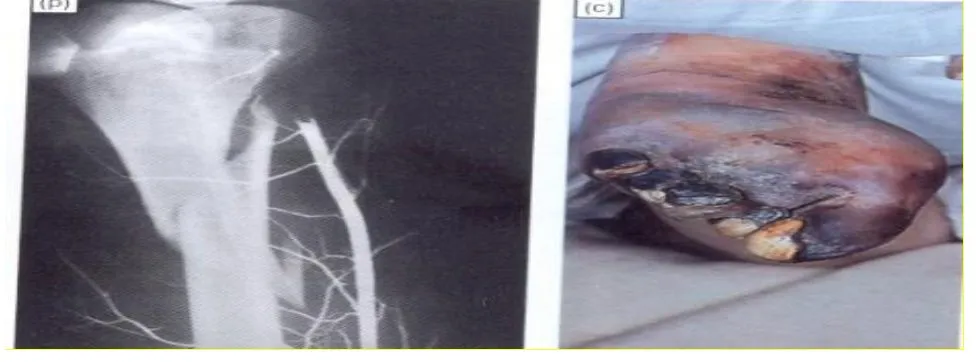
Signs of ischaemia (the The 5 PsMemory list of the signs of ischaemia: Pain, Pallor, Pulselessness, Paralysis and Paraesthesia.): Pain · PallorAbnormal paleness of the skin.General meaning, not from the slides · PulselessnessNo pulse can be felt in the limb.General meaning, not from the slides · ParalysisLoss of the ability to move a body part voluntarily.General meaning, not from the slides · ParaesthesiaAbnormal skin sensations such as pins and needles or tingling.General meaning, not from the slides
Fractures commonly associated with vascular injury:
| Injury | Artery |
|---|---|
| 1st rib fracture | Subclavian arteryThe main artery running under the collarbone to the arm.General meaning, not from the slides |
| Shoulder DislocationA joint whose bones have been forced out of their normal alignment.General meaning, not from the slides | AxillaryRelating to the armpit (axilla). The axillary artery and axillary nerve both pass near the shoulder joint.General meaning, not from the slides |
| HumeralRelating to the humerus, the upper-arm bone.General meaning, not from the slides Supracondylar fractureA break just above the condyles at the lower end of the humerus, near the elbow.General meaning, not from the slides fracture | Brachial arteryThe main artery of the upper arm, running down to the elbow.General meaning, not from the slides |
| Elbow dislocation | Brachial |
| Knee dislocation | PoplitealRelating to the area behind the knee. The popliteal artery runs through it.General meaning, not from the slides |
| ProximalCloser to the trunk or the point of attachment of a limb.General meaning, not from the slides TibialRelating to the tibia, the shin bone.General meaning, not from the slides fracture | Popliteal or its branches |
Nerve injury
- More common than arterial injury. Most frequent with humerus, elbow and knee fractures, especially the Radial nerveThe nerve that runs down the back of the arm and forearm and controls the muscles that straighten the elbow, wrist and fingers.General meaning, not from the slides nerve, mostly from Tension neuropraxiaTemporary nerve injury in which a nerve is stretched or bruised but not cut.General meaning, not from the slides.
- Damaged by LacerationA cut or tear in tissue.General meaning, not from the slides, TractionA pulling force applied to a limb or to the spine.General meaning, not from the slides, pressure or prolonged ischaemia.
| Injury | Nerve |
|---|---|
| 1. Shoulder dislocation | Axillary |
| 2. Humeral shaft fracture | Radial |
| 3. Lower end of RadiusThe forearm bone on the thumb side.General meaning, not from the slides | Median nerveThe nerve that runs down the middle of the forearm into the hand and supplies the thumb side of the palm.General meaning, not from the slides |
| 4. Humeral supracondylar (especially children) | Radial or median (Anterior interosseous nerveA branch of the median nerve that supplies deep muscles at the front of the forearm.General meaning, not from the slides) |
| 5. Medial CondyleA rounded bump at the end of a bone, where it forms part of a joint.General meaning, not from the slides | Ulnar nerveThe nerve that passes behind the inner elbow and runs to the little-finger side of the hand.General meaning, not from the slides |
| 6. Elbow dislocation | Ulnar |
| 7. Hip dislocation | Sciatic nerveThe largest nerve in the body, running from the lower back through the buttock and down the back of the leg.General meaning, not from the slides |
| 8. Knee dislocation | Peroneal nerveThe nerve that winds around the neck of the fibula and supplies muscles that lift the foot.General meaning, not from the slides |
| 9. Fracture of FibulaThe thin bone on the outer side of the lower leg.General meaning, not from the slides neck | Peroneal |
Watch the overlaps: elbow dislocation injures the brachial artery and the ulnar nerve; knee dislocation injures the popliteal artery and the peroneal nerve; shoulder dislocation injures the axillary artery and the Axillary nerveThe nerve that wraps around the top of the humerus and supplies the deltoid muscle and the skin over the shoulder.General meaning, not from the slides.
Clinical features: numbness and weakness · skin smooth, shiny but dry · muscle wasting · blunted sensation · Tinel's signTingling felt in a nerve's area when the nerve is tapped along its path; a positive result points to nerve injury.General meaning, not from the slides positive.
Investigations: EMGElectromyography: a test that records the electrical activity of muscles.General meaning, not from the slides and Nerve conduction studiesTests that measure how fast electrical signals travel along a nerve.General meaning, not from the slides, which help establish the level and severity of the LesionAny area of damaged or abnormal tissue.General meaning, not from the slides.
Physical Therapy During Immobilization
Goals
- Decrease pain and InflammationThe body's response to injury or irritation, causing pain, swelling, redness and heat.General meaning, not from the slides in the ImmobilizationKeeping a body part still, for example with a cast, splint or bed rest, so that it can heal.General meaning, not from the slides joint.
- Maintain muscle Muscle powerThe muscle working dynamically against resistance within a set time. and avoid AtrophyWasting away, or shrinking in size, of a tissue such as muscle.General meaning, not from the slides.
- Maintain circulation and avoid swelling in the involved limb.
- Maintain normal ROMRange of motion: how far a joint can move in each direction.General meaning, not from the slides of the free joints as much as possible.
General exercises
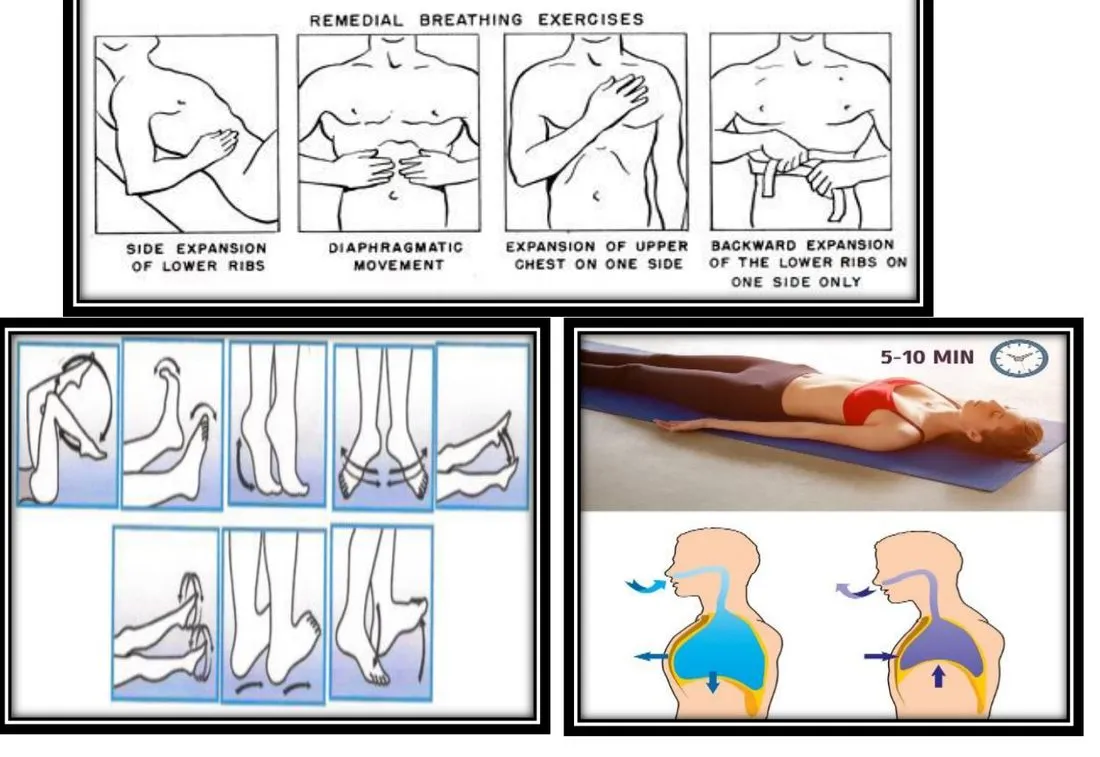
-
Breathing exercisesExercises that lower the risk of pulmonary complications, raise cellular oxygen and have a positive effect on the joints. (local and general): lower the risk of PulmonaryRelating to the lungs.General meaning, not from the slides complications, raise cellular oxygen and have a positive effect on the joints.
-
Circulatory exercisesExercises that improve the muscles' ability to extract oxygen from the blood, so the heart needs to pump less to the muscles.: improve the muscles’ ability to extract oxygen from the blood, so the heart needs to pump less to the muscles. (The handout’s sentence ends “…and prevent circulatory exercises”, which looks like a typo for preventing circulatory complications.)
-
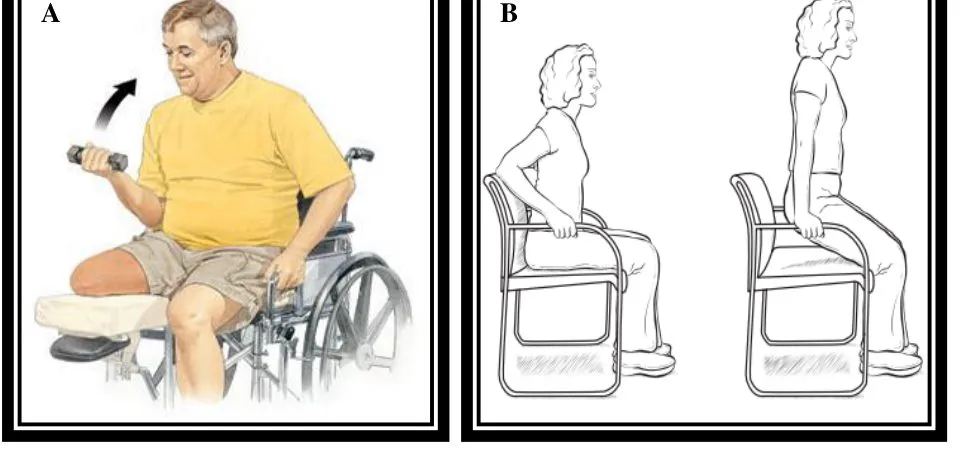
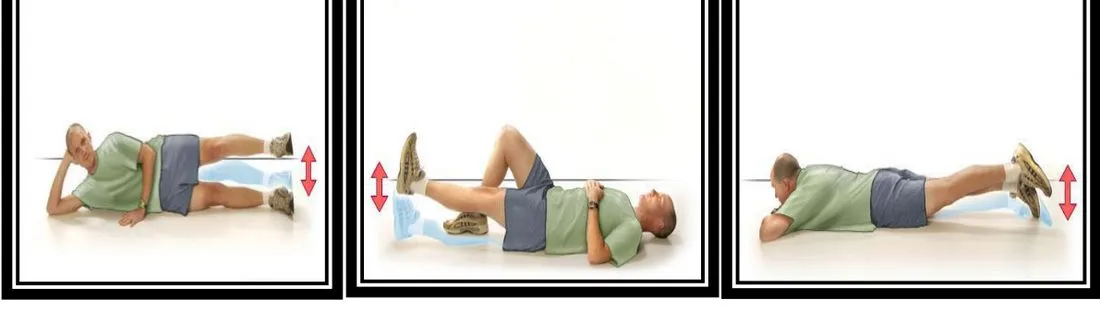
Upper limb strengthening for later crutch walking:
- Shoulder depressorsMuscles that pull the shoulder girdle downward, used to lift the body weight over a crutch.General meaning, not from the slides to lift the body weight over the crutch; adductors to hold the crutch against the chest wall; abductors, flexors and extensors to move the crutch forward, backward and sideways.
- Elbow extensors to stop the elbow buckling.
- Wrist extensors and Intrinsic hand musclesThe small muscles that lie entirely within the hand.General meaning, not from the slides.
- Plus the trunk muscles.
-
ContralateralOn the opposite side of the body from the structure being discussed.General meaning, not from the slides lower limb strengthening, preparing for non- or partial weight bearing on the involved limb.
-
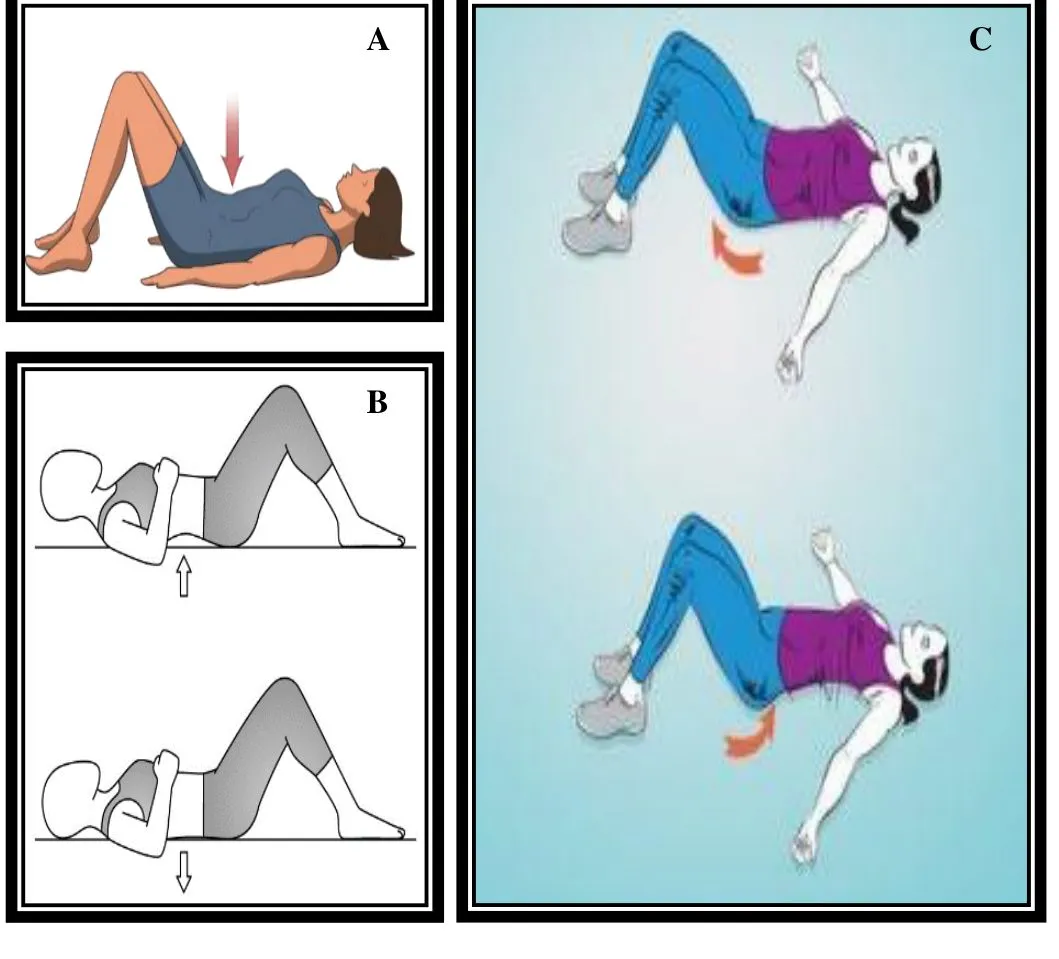
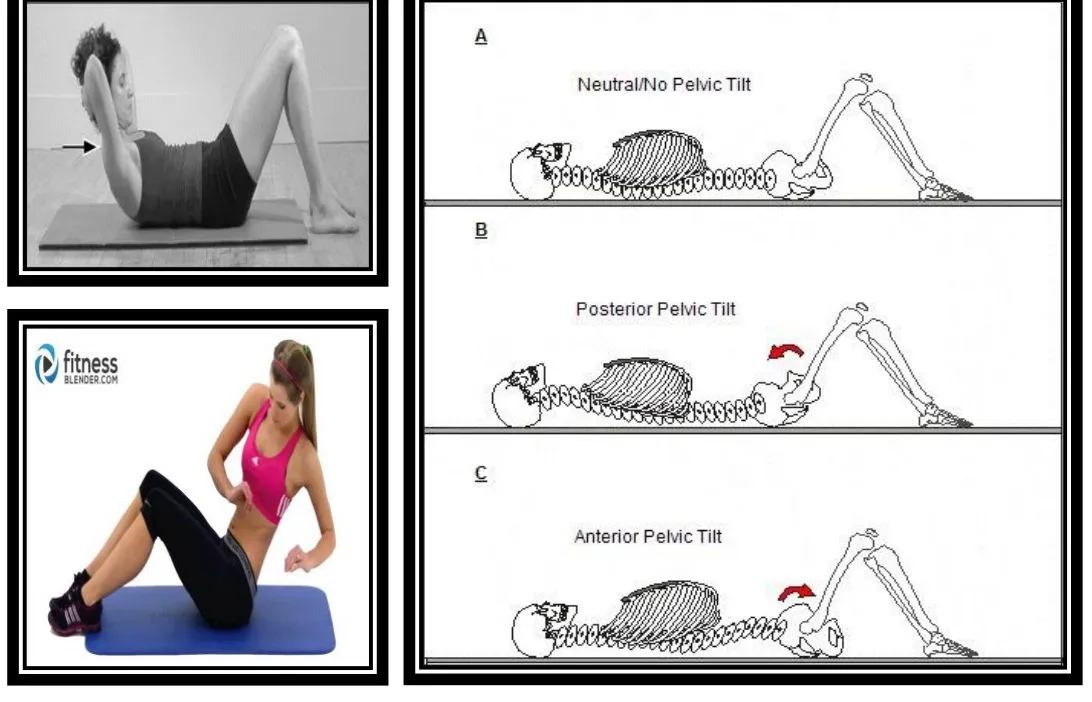
Setting (static) exerciseA muscle contraction held without the joint moving (isometric), used for the muscles around an immobilized joint.General meaning, not from the slides abdominal and back exercises (plus Pelvic tiltsExercise in which the pelvis is rocked forward and backward.General meaning, not from the slides). DynamicInvolving movement or change. A dynamic exercise moves the joint, unlike a static hold.General meaning, not from the slides upper abdominal strengthening is added once hip pain has eased and the ReductionPutting a broken or dislocated bone back into its correct position.General meaning, not from the slides is stable.
Immobilization and the musculoskeletal system
- Both fibre types atrophy, but Type II fibresFast-twitch muscle fibres, built for quick, forceful movements.General meaning, not from the slides faster than Type I fibresSlow-twitch muscle fibres, built for endurance and posture.General meaning, not from the slides, even with short immobilization. After 72 hours: up to 14% atrophy of type I and 17% of type II fibres.
- Antigravity musclesMuscles that work against gravity to hold the body upright.General meaning, not from the slides lose the most strength, because they lose Muscle toneThe slight constant tension in a resting muscle.General meaning, not from the slides when no weight is moved.
- ContractureA fixed joint deformity from immobility, caused by the dynamic nature of connective tissue.: fixed joint deformities from immobility, caused by the dynamic nature of Connective tissueTissue that supports and links other tissues, such as tendons, ligaments and fascia.General meaning, not from the slides.
- Bone: formation stops while OsteoclastA cell that breaks down bone.General meaning, not from the slides activity continues, so bone density falls and bone becomes soft and weak.
Exercises for the involved limb
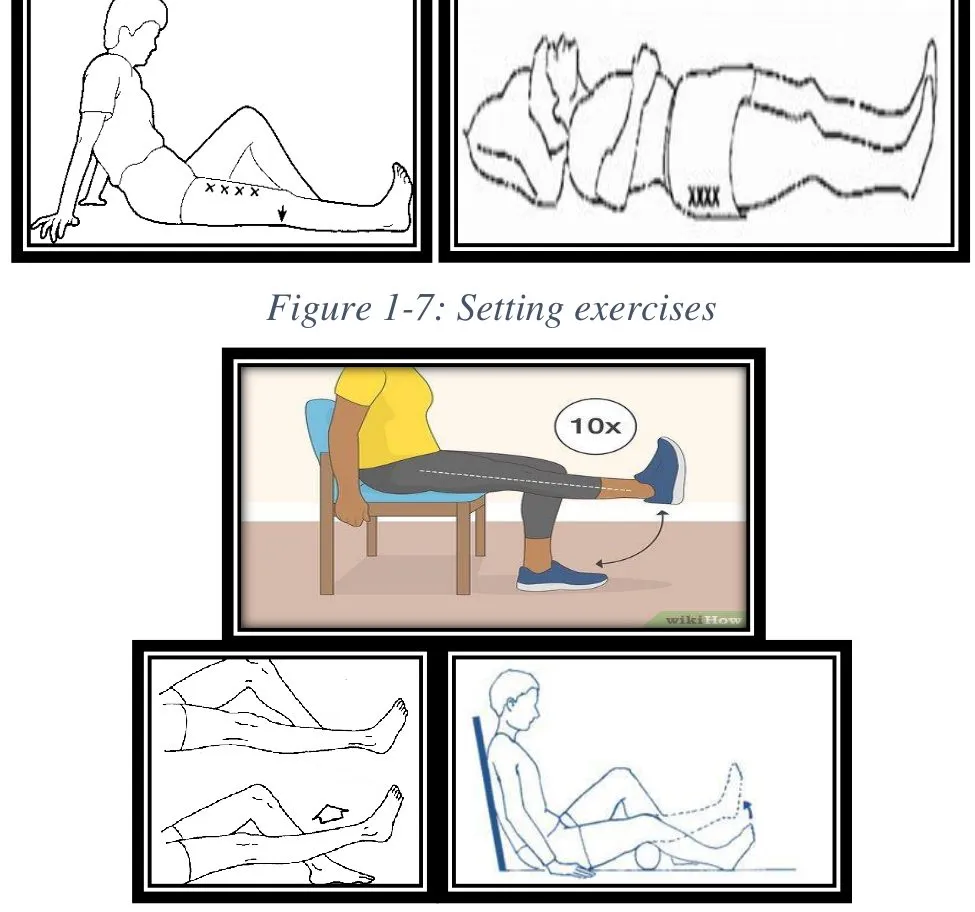
- Setting (static) exercises for the muscles around the immobilized joint.
- Active free exerciseMovement the patient performs alone, without help and without added resistance.General meaning, not from the slides and Resisted exerciseExercise performed against an added load, such as weights or elastic bands.General meaning, not from the slides for the free parts.
- Active-assisted ROMJoint movement the patient performs with some help from a therapist or device.General meaning, not from the slides and free ROM of the knee, if the TractionA pulling force applied to a limb or to the spine.General meaning, not from the slides system allows.
Common Problems After Immobilization
- Pain
- Joint hypomobilityA joint that moves less than normal.General meaning, not from the slides
- Impaired Muscle performanceHow well a muscle can do its work: its strength, power and endurance.General meaning, not from the slides
- Endurance impairment
- Posture and movement impairment
1. Pain
-
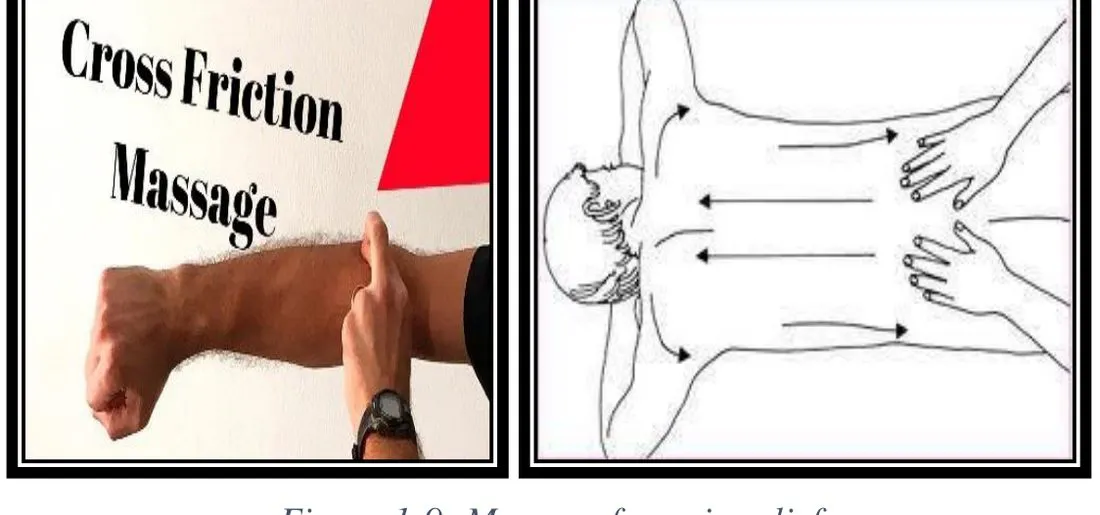
Transverse friction massageDeep massage applied across the direction of the fibres of a tendon, ligament or muscle.General meaning, not from the slides at the Tenoperiosteal junctionThe point where a tendon attaches to the outer covering (periosteum) of a bone.General meaning, not from the slides, to help form a strong, mobile scar.
-
EffleurageA massage technique of light, smooth stroking.General meaning, not from the slides over the muscle belly to improve general blood flow.
-
Active exercise and Electrical stimulationUsing electric current to make muscles contract or to reduce pain.General meaning, not from the slides in Mid-rangeThe middle part of a joint's available range of movement.General meaning, not from the slides to broaden the muscle (the same purpose as transverse friction).
-
Physical agentsHeat, cold, sound, electricity and similar agents used to treat the body.General meaning, not from the slides (CryotherapyTreatment that uses cold.General meaning, not from the slides, Paraffin bathA bath of warm liquid wax into which a hand or foot is dipped to apply heat.General meaning, not from the slides) or ElectrotherapyTreatment that uses electrical current or related energy.General meaning, not from the slides (PhonophoresisUsing ultrasound to drive medication through the skin into the tissues.General meaning, not from the slides, UltrasoundSound waves above the range of hearing, used in therapy to treat deep tissues.General meaning, not from the slides) on the involved joint.
-
Activity modification: reduce or stop the activities that cause or keep the problem going.
2. Joint hypomobility
Causes of post-fracture stiffness: ContractureA fixed joint deformity from immobility, caused by the dynamic nature of connective tissue., dense Intra-articular adhesionsBands of scar tissue inside a joint that stick its structures together.General meaning, not from the slides, FibrosisThickening and scarring of tissue.General meaning, not from the slides of Peri-articularAround a joint.General meaning, not from the slides structures, ImmobilizationKeeping a body part still, for example with a cast, splint or bed rest, so that it can heal.General meaning, not from the slides, pain, Muscle guardingInvoluntary tightening of muscles to protect a painful area.General meaning, not from the slides, or reduced joint function.
Three things to determine:
- Which structures are limiting motion
- The direction of hypomobility
- The severity of the restriction
| Severity | Programme |
|---|---|
| Mild | Self-stretching, self-MobilizationGentle movement of a joint or soft tissue, by the therapist or by the patient, to improve how freely it moves.General meaning, not from the slides, active exercise |
| Severe | Manual joint mobilization, Soft tissueTissue that is not bone, such as muscle, tendon, ligament, fascia and skin.General meaning, not from the slides mobilization or Manual stretchingStretching carried out by the therapist's hands.General meaning, not from the slides |
N.B.
- Stretch the short muscle and strengthen its AntagonistA muscle that produces the opposite movement to the muscle being discussed.General meaning, not from the slides together.
- Teach active exercise through a functional range.
- Posture education is an important part of treating mobility problems.
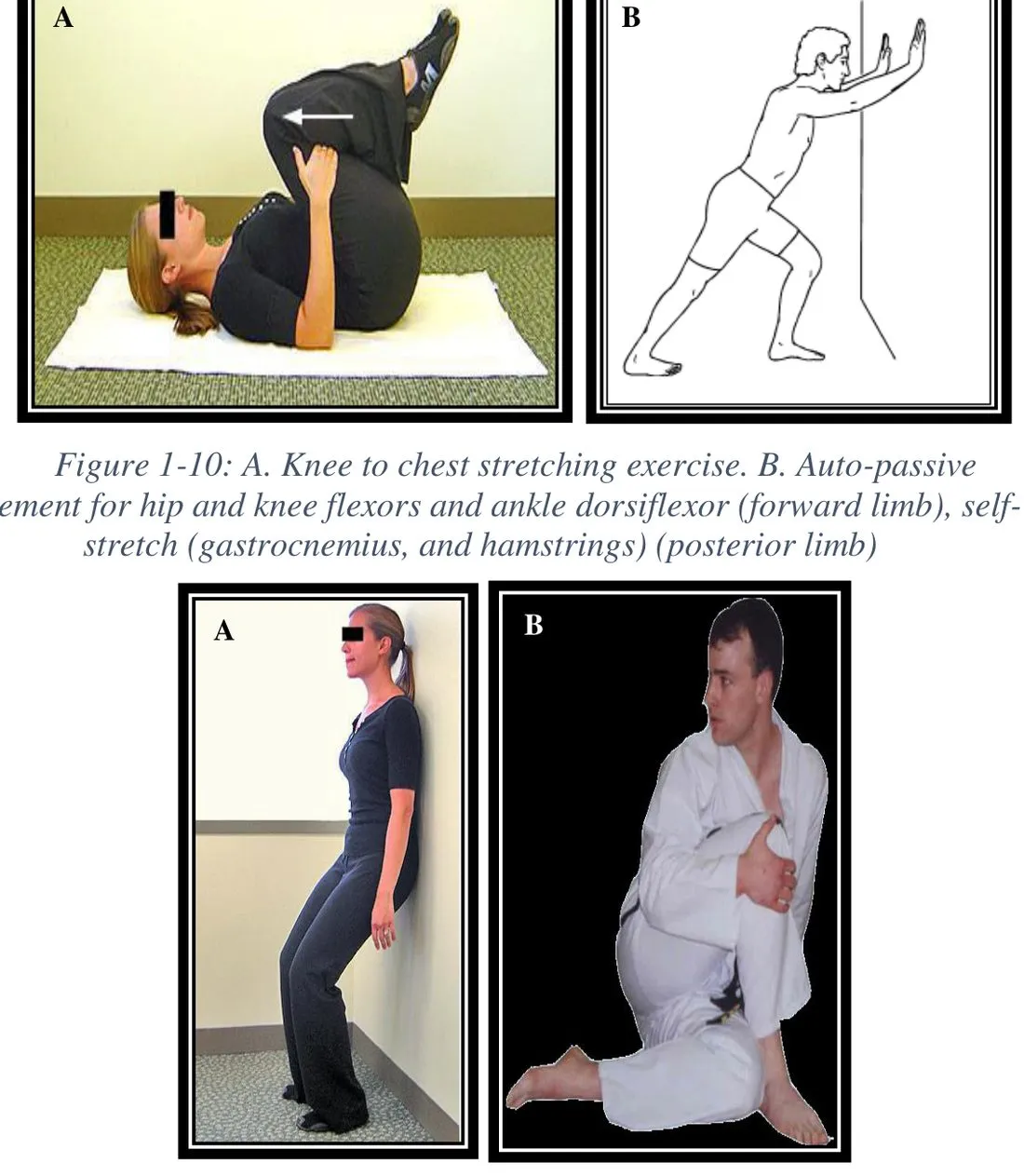
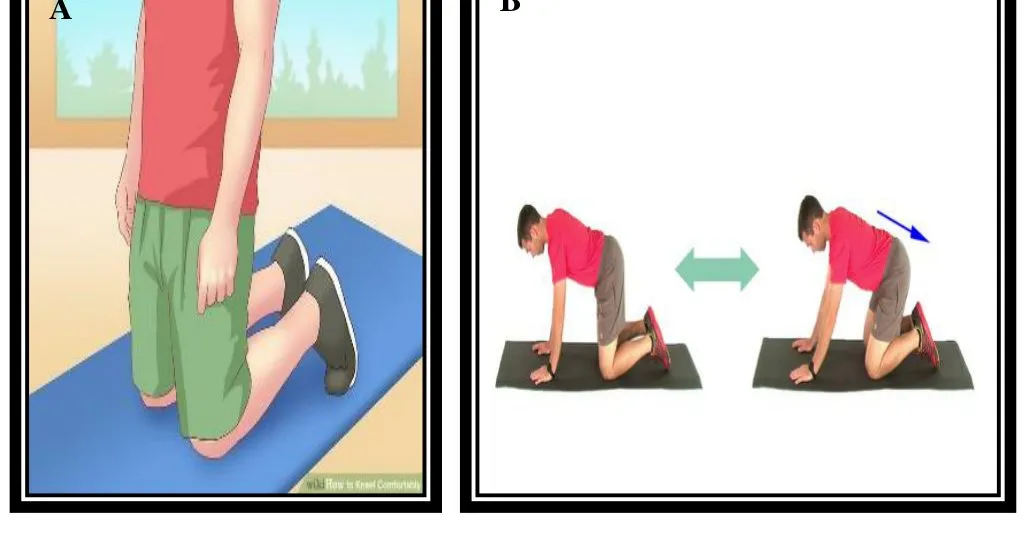
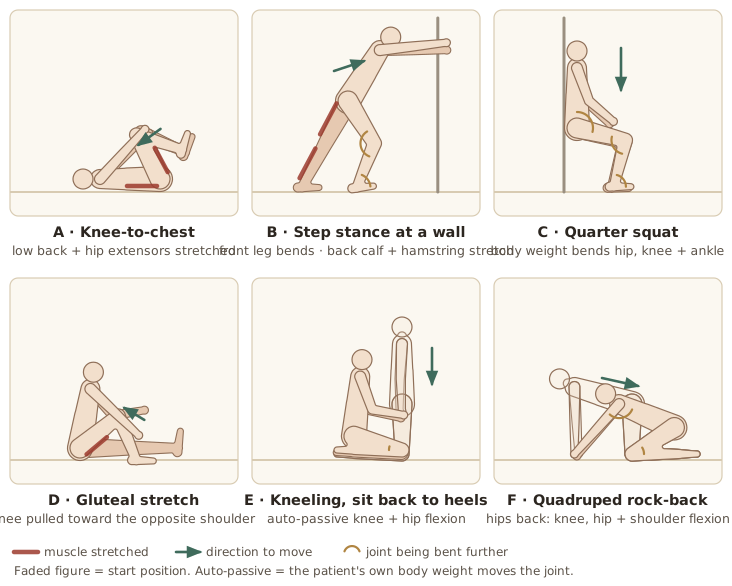
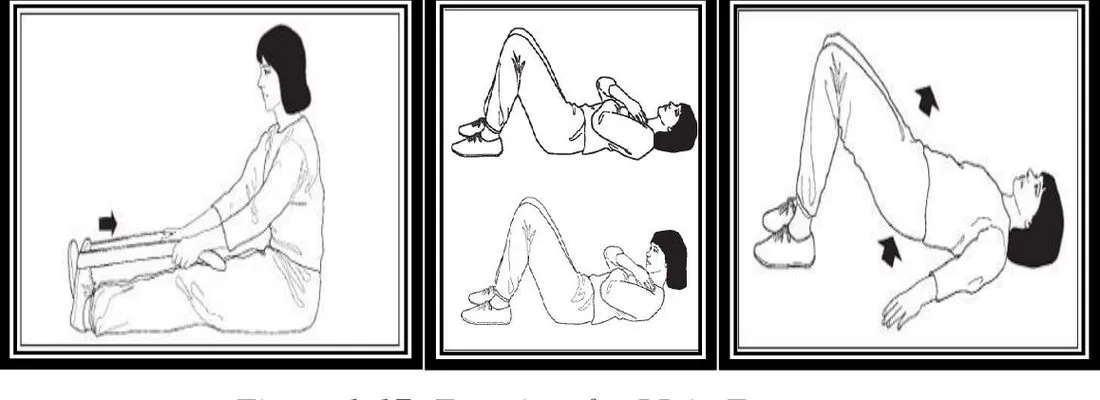
Example mobility exercises (slide figures): knee-to-chest stretch; Auto-passive movementPassive stretching or movement of a joint that the patient produces using their own body weight or another limb.General meaning, not from the slides movement for hip and knee flexors and ankle DorsiflexorsThe muscles that lift the foot up toward the shin.General meaning, not from the slides with self-stretch of GastrocnemiusThe large calf muscle that points the foot down and helps bend the knee.General meaning, not from the slides and HamstringsThe muscle group at the back of the thigh that bends the knee and extends the hip.General meaning, not from the slides; Quarter squatA partial squat in which the knees bend only a short way.General meaning, not from the slides; Glute max/medGluteus maximus and gluteus medius: the main buttock muscles.General meaning, not from the slides stretches; kneeling; QuadrupedOn hands and knees.General meaning, not from the slides auto-passive exercises.
3. Impaired muscle performance
- Start with low-load SubmaximalWorking at less than maximum effort.General meaning, not from the slides IsometricA muscle contraction in which the muscle tenses but the joint does not move.General meaning, not from the slides at several positions within the pain-free range.
- Then ConcentricA muscle contraction in which the muscle shortens while it works.General meaning, not from the slides–EccentricA muscle contraction in which the muscle lengthens while it works, such as controlled lowering.General meaning, not from the slides DynamicInvolving movement or change. A dynamic exercise moves the joint, unlike a static hold.General meaning, not from the slides exercise.
- Introduce heavier strength regimes gradually.
- Train the type of contraction and movement pattern the muscle needs as early as possible.
- Add activity-specific exercise tied to the patient’s functional goals.
- Finish with complex functional patterns and a gradual return to sport.
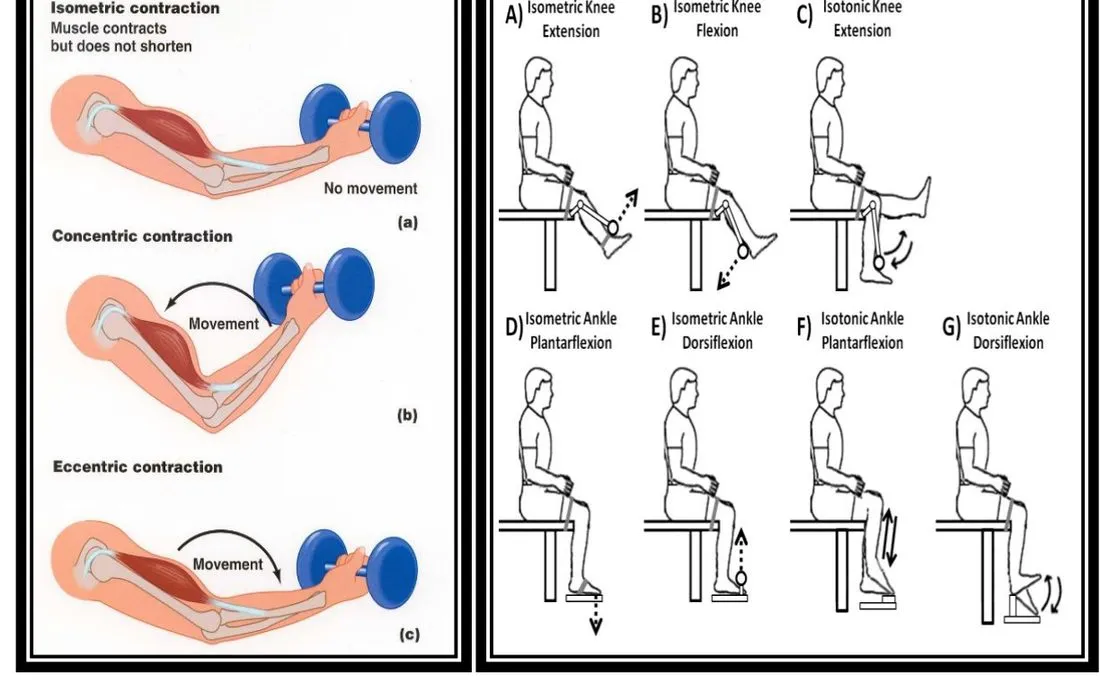
4. Endurance impairment
- Postural faults are often due to poor muscle endurance.
- Endurance exercise: low load, high repetitions.
5. Posture and movement impairment
Restoring good posture and movement for the whole region should be part of every exercise prescription after immobilization.
Example: Elbow Dislocation
Common problems: pain in the elbow and arm · swelling of the hand · limited ROMRange of motion: how far a joint can move in each direction.General meaning, not from the slides (elbow stiffness) · arm muscle weakness.
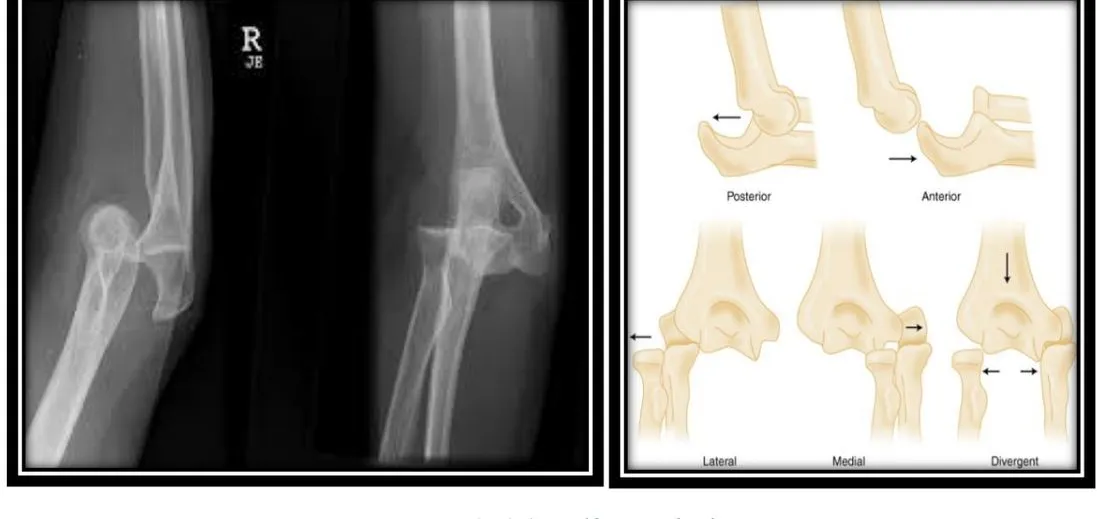
PTPhysical therapy (physiotherapy): treatment that uses exercise, movement and hands-on techniques to restore movement and function.General meaning, not from the slides goals during ImmobilizationKeeping a body part still, for example with a cast, splint or bed rest, so that it can heal.General meaning, not from the slides of the elbow:
- Decrease pain and InflammationThe body's response to injury or irritation, causing pain, swelling, redness and heat.General meaning, not from the slides in the arm.
- Maintain muscle Muscle powerThe muscle working dynamically against resistance within a set time. and avoid AtrophyWasting away, or shrinking in size, of a tissue such as muscle.General meaning, not from the slides around the elbow.
- Maintain circulation and avoid swelling in the DistalFarther from the trunk or the point of attachment of a limb.General meaning, not from the slides hand.
- Maintain normal ROM of the shoulder and hand.
Exercise programme during immobilization:
- Active ROM of the Shoulder girdleThe collarbone and shoulder blade, with the joints that connect them to the trunk.General meaning, not from the slides: Scapular elevationLifting the shoulder blade upward, as in a shrug. Depression is the opposite movement.General meaning, not from the slides, DepressionPersistent low mood and loss of interest. In shoulder movement it also means pulling the shoulder blade downward.General meaning, not from the slides, RetractionPulling a part backward, for example drawing the shoulder blades toward the spine.General meaning, not from the slides, ProtractionPushing a part forward, for example moving the shoulder blades forward around the ribcage.General meaning, not from the slides, outward and inward rotation.
- Active shoulder exercise: flexion, extension, AbductionMoving a limb away from the midline of the body.General meaning, not from the slides, AdductionMoving a limb toward the midline of the body.General meaning, not from the slides, rotation.
- Setting (static) exerciseA muscle contraction held without the joint moving (isometric), used for the muscles around an immobilized joint.General meaning, not from the slides (IsometricA muscle contraction in which the muscle tenses but the joint does not move.General meaning, not from the slides) elbow exercise: flexion, extension, PronationTurning the forearm so that the palm faces down.General meaning, not from the slides, SupinationTurning the forearm so that the palm faces up.General meaning, not from the slides. The elbow itself is immobilized, so it only gets static work.
- Active and passive ROM of the shoulder, wrist and hand.
- Gentle passive and active ROM of the thumb and fingers.
- Elevation of the armRaising the arm to help reduce swelling.General meaning, not from the slides (for swelling).
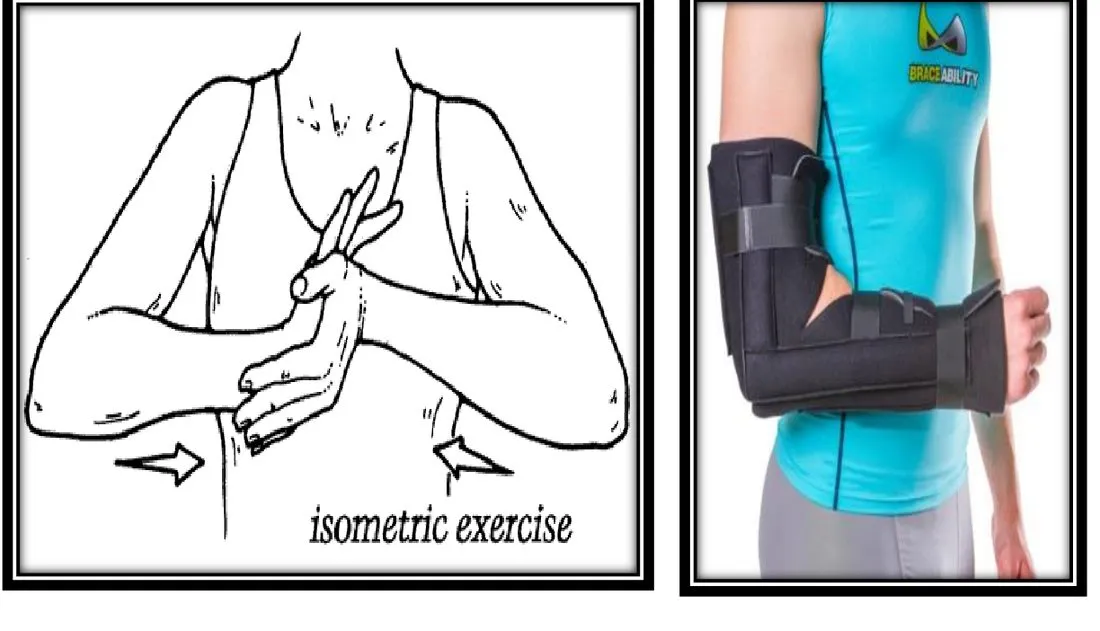
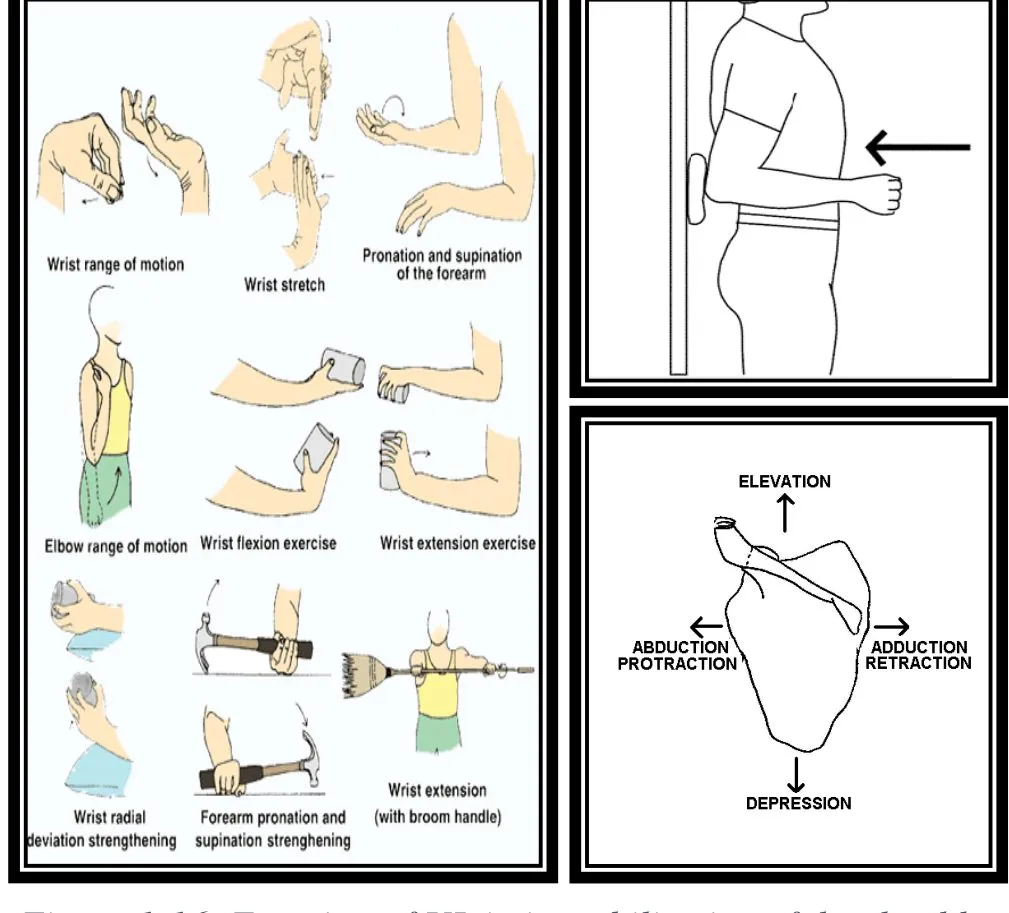
After immobilization: 7. MobilizationGentle movement of a joint or soft tissue, by the therapist or by the patient, to improve how freely it moves.General meaning, not from the slides and stretching of the elbow. 8. PREProgressive resistance exercise: strengthening in which the load is gradually increased.General meaning, not from the slides (progressive resistance exercise) for all upper limb muscles. 9. Functional and ProprioceptionThe body's sense of where its joints are and how they are moving.General meaning, not from the slides exercise of the upper limb.
Exercise Prescription After Fracture Healing
A. Overcoming impaired muscle performance
- ImmobilizationKeeping a body part still, for example with a cast, splint or bed rest, so that it can heal.General meaning, not from the slides causes Connective tissueTissue that supports and links other tissues, such as tendons, ligaments and fascia.General meaning, not from the slides weakening, Articular cartilageThe smooth cartilage that covers the ends of the bones inside a joint.General meaning, not from the slides degeneration, muscle AtrophyWasting away, or shrinking in size, of a tissue such as muscle.General meaning, not from the slides, ContractureA fixed joint deformity from immobility, caused by the dynamic nature of connective tissue. and sluggish circulation.
- Consult the referring physician to confirm clinical or RadiologicalSeen on X-ray or other imaging.General meaning, not from the slides healing.
- Until radiological healing, avoid high stress across the fracture site: heavy resistance, stretch force or weight bearing.
- After radiological healing, the bone has normal Structural integrityThe bone's ability to hold its shape and take load.General meaning, not from the slides and can take normal stress.
- Then examine the patient (impairments, function, activity level, goals) to plan the right programme.
- Programmes should cover flexibility, strengthening, Muscle powerThe muscle working dynamically against resistance within a set time., endurance, and so on.
B. Warm-up and cool-down
Every session: 5–15 min warm-up and 5–15 min cool-down.
| Content | Purpose | |
|---|---|---|
| Warm-up | Low-intensity CardiorespiratoryRelating to the heart and lungs working together.General meaning, not from the slides activity | Stops the heart and circulation being suddenly OverloadMaking a muscle work above the level it is used to, which is what makes it stronger. |
| Cool-down | Low-intensity cardiorespiratory activity + flexibility | Prevents abrupt physiological changes when strenuous exercise stops suddenly |
C. Strengthening
- A muscle strengthens when it’s forced to work above the level it’s used to (overload).
- Functional strengthThe ability of the neuromuscular system to perform functional activities smoothly and in coordination.: the Neuromuscular systemThe nerves and muscles working together to produce movement.General meaning, not from the slides system’s ability to perform functional activities smoothly and in coordination. Muscles work EccentricA muscle contraction in which the muscle lengthens while it works, such as controlled lowering.General meaning, not from the slides, IsometricA muscle contraction in which the muscle tenses but the joint does not move.General meaning, not from the slides and ConcentricA muscle contraction in which the muscle shortens while it works.General meaning, not from the slides in all three Planes of movementThe three imaginary flat surfaces that divide the body (front/back, left/right, top/bottom) and are used to describe movement.General meaning, not from the slides, so training should be Multi-planarInvolving movement in more than one plane (direction) of the body.General meaning, not from the slides across the full range of contraction types and speeds.
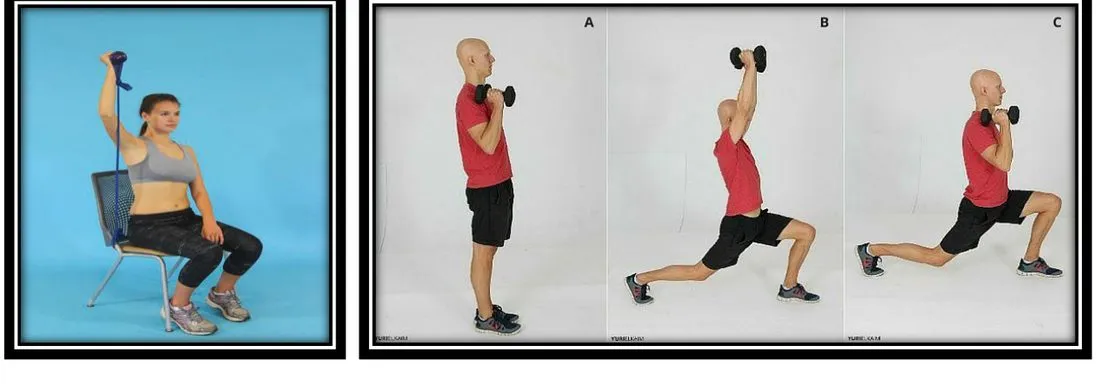
D. Programme variables for strength
| Variable | Prescription |
|---|---|
| Reps and setsReps (repetitions) are how many times a movement is repeated in a row. A set is one group of reps.General meaning, not from the slides and sets | 8–12 reps × 3–5 sets, 60–90 s rest between sets (strength, endurance and HypertrophyAn increase in the size of muscle.General meaning, not from the slides) |
| Intensity | 60–70% of 1 RMOne-repetition maximum: the heaviest weight a person can lift once.General meaning, not from the slides for healthy adults |
| Frequency | 2–3 times a week (every other day), up to 5 sessions a week |
| Duration | 15–60 min depending on intensity |
| Rest between sessions | 48 hours generally recommended |
E. Muscle endurance
- Goal: fatigue resistance over longer durations (resistance training aims at mass, strength and power instead).
- Light resistance, many reps: at least 20 per set, so energy used matches energy supplied.
- General endurance: 30% of 1 RM, 10–30 s rest, 20–150 reps.
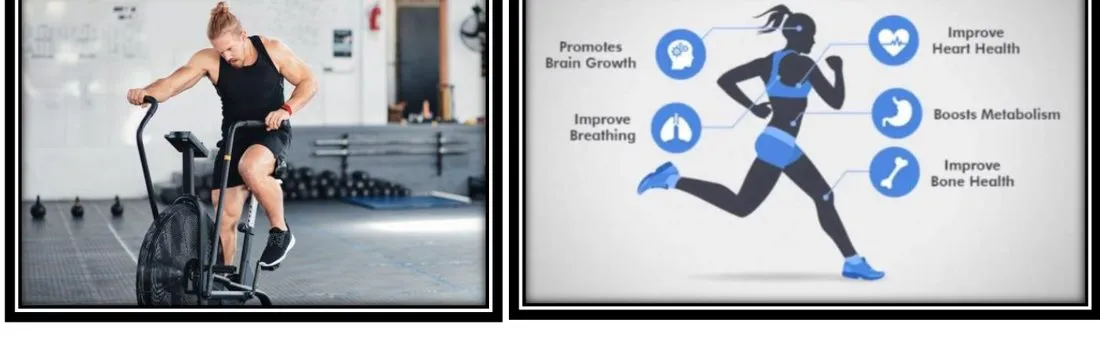
- Works the body AerobicUsing oxygen to produce energy.General meaning, not from the slides (cardiopulmonary endurance). Steady stateA point during constant-intensity exercise when the body's oxygen supply matches the demand.General meaning, not from the slides is reached after about 5–6 minutes at constant intensity.
- Main drawback: Overuse injuriesInjuries caused by repeating the same movement or load too often, without enough recovery.General meaning, not from the slides. Reduce the risk by varying sets, loads, rest periods, number of exercises, hand position and grip width.
- Working at a level the muscle is used to improves endurance but not strength.
F. Muscle power
- Power = the muscle working dynamically against resistance within a set time.
- Olympic weightlifting builds power in athletes, but has a steep learning curve and needs total-body coordination, strength and balance.
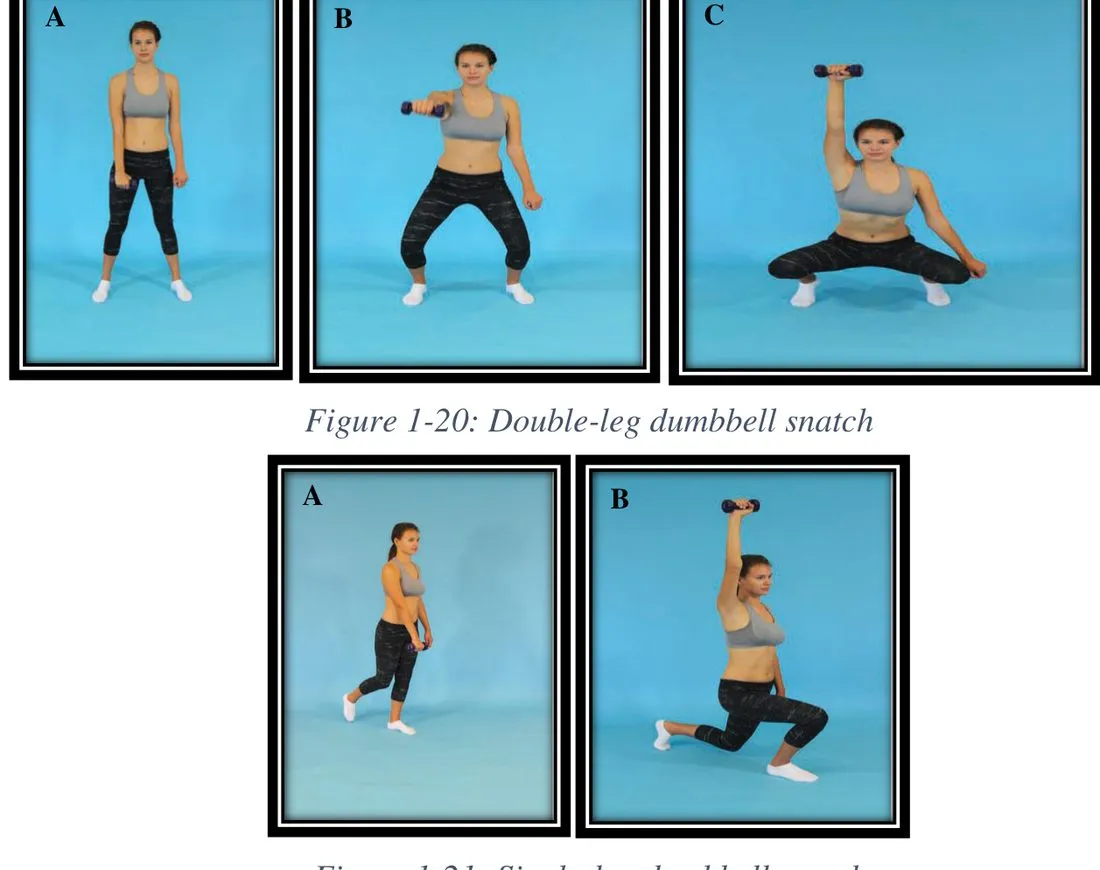
- Two simpler dumbbell techniques for rehabilitation:
- Dumbbell snatchA power exercise in which a dumbbell is raised overhead in one smooth movement, from a squat (double-leg) or a lunge (single-leg).: feet shoulder-width apart, dumbbell in one hand → squat → raise the dumbbell overhead in one smooth movement.
- Single-leg dumbbell snatch: stand on one leg with the other slightly behind → lunge while raising the dumbbell overhead.
| Strength | Endurance | |
|---|---|---|
| Load | 60–70% 1 RM | 30% 1 RM |
| Reps | 8–12 | ≥ 20 per set (20–150) |
| Rest | 60–90 s between sets | 10–30 s |